Best 7 things to do in Split in Croatia! Travel guide to Split
Split does not try to be perfect, and that is exactly why it is so attractive. Roman ruins are part of everyday life here, and only a few steps separate historical landmarks from the sea. Discover the most interesting attractions in Split and learn what you should know before your trip.
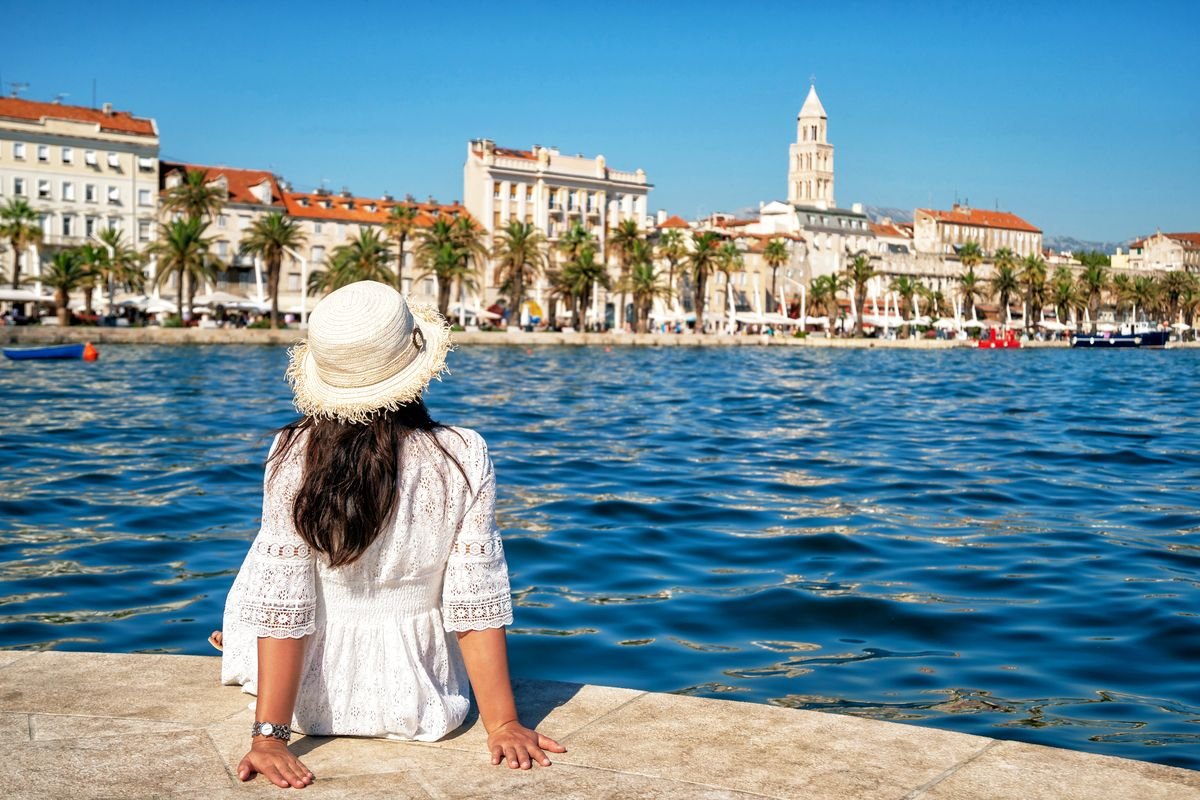
Riva - start exploring Split
Riva is the easiest place to begin discovering Split, and chances are you will return here several times.
The seaside promenade stretches along the port, where you can admire the Adriatic Sea. On one side, there is a view of moored boats, and on the other, the historic walls of Diocletian’s Palace, reminding you that you are standing in a place with over 1,700 years of history. This contrast is one of Split’s greatest strengths - everything blends together naturally, without an artificial division between “historical monument” and “everyday life”.
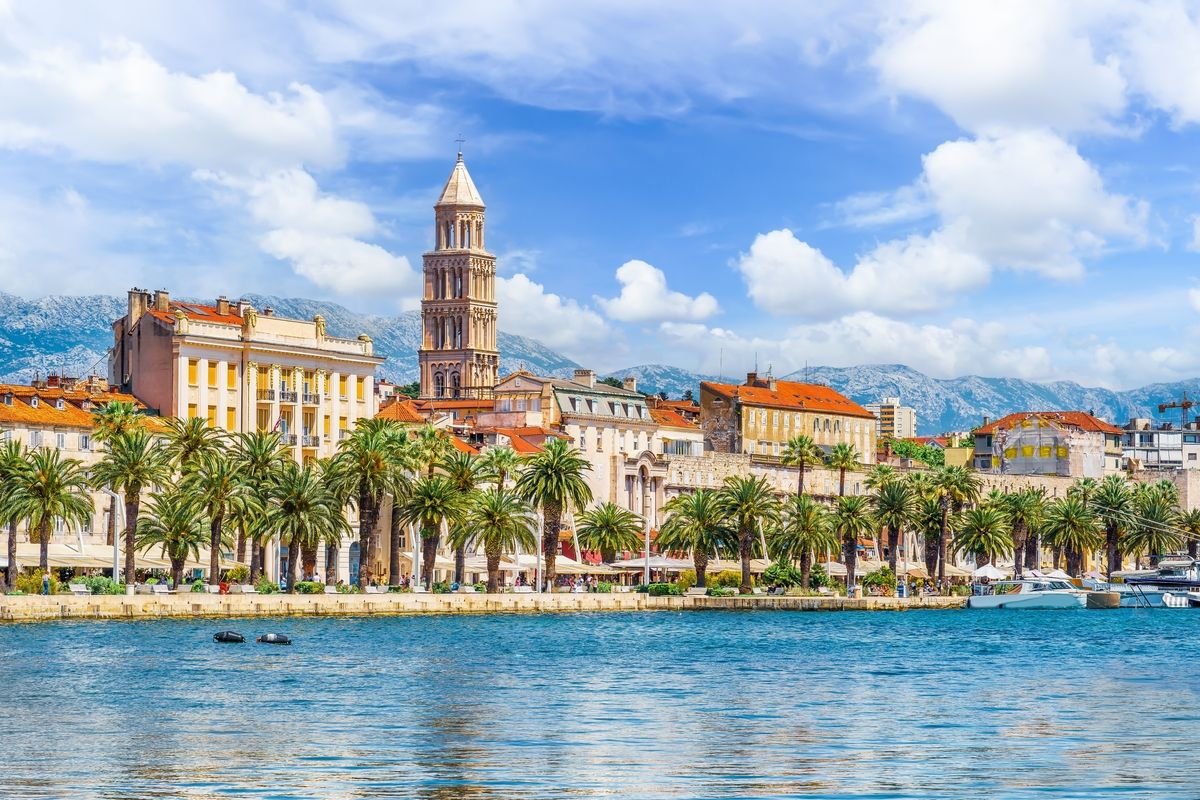
In the morning, Riva is peaceful, making it the perfect moment for coffee and watching the city wake up. During the day, it becomes livelier, and in the evening, the promenade turns into a social hotspot. Lights, music, and crowded cafés create the atmosphere typical of Mediterranean resorts.
It is also an excellent landmark. From here, you can reach places such as the Golden Gate or the Temple of Jupiter within a few minutes, which is why most sightseeing tours start here.
If you have limited time in Split, Riva will quickly let you feel the city’s atmosphere. If you stay longer, it will become a stop between the city’s main attractions.
Diocletian’s Palace in Split - Croatian heritage
Diocletian’s Palace is not only the city’s most important monument but also its heart, because the entire city of Split developed around it. Interestingly, it is not a palace in the classic sense, but a huge complex built at the turn of the 3rd and 4th centuries as the residence of the retired Roman emperor.
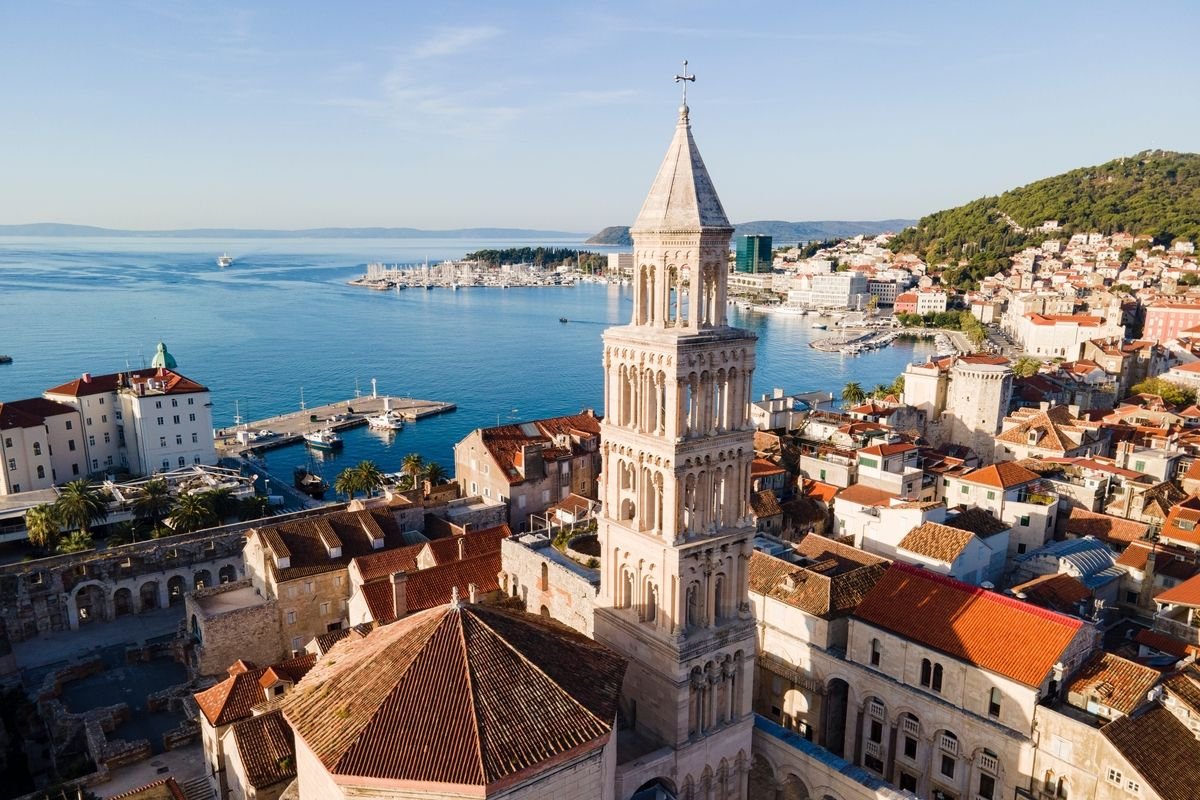
The most surprising thing is that the Palace is still alive today. Within its walls, you will find shops and restaurants, and the narrow streets are a natural extension of the city itself.
The central point of the complex is the Peristyle, the former courtyard that today serves as a meeting place and event space. It is also worth visiting the Palace's basements, which have been preserved in excellent condition and offer visitors a better understanding of the complex's structure.
Golden Gate - an important attraction in Split old town
The Golden Gate was once the main entrance to the Palace from the northern side and was meant to impress, especially those entering together with the emperor. It is the most representative of the four gates leading into the complex.
Today, it is simpler than it once was, but it still clearly shows its former importance. The high walls and solid construction demonstrate how important the defence of Diocletian’s Palace was.
Walking through the Golden Gate, you immediately enter the labyrinth of the old town streets. During your visit to Split, you will definitely pass through this place.
Do you know...?
Right next to the Golden Gate stands a statue of Gregory of Nin. According to local tradition, touching his big toe brings good luck - it's hard to miss, as it's clearly polished by tourists.
Temple of Jupiter
The Temple of Jupiter is a small yet distinctive building hidden within Diocletian’s Palace. It was originally built as a place of worship dedicated to Jupiter, the most important Roman god, and later converted into a baptistery.
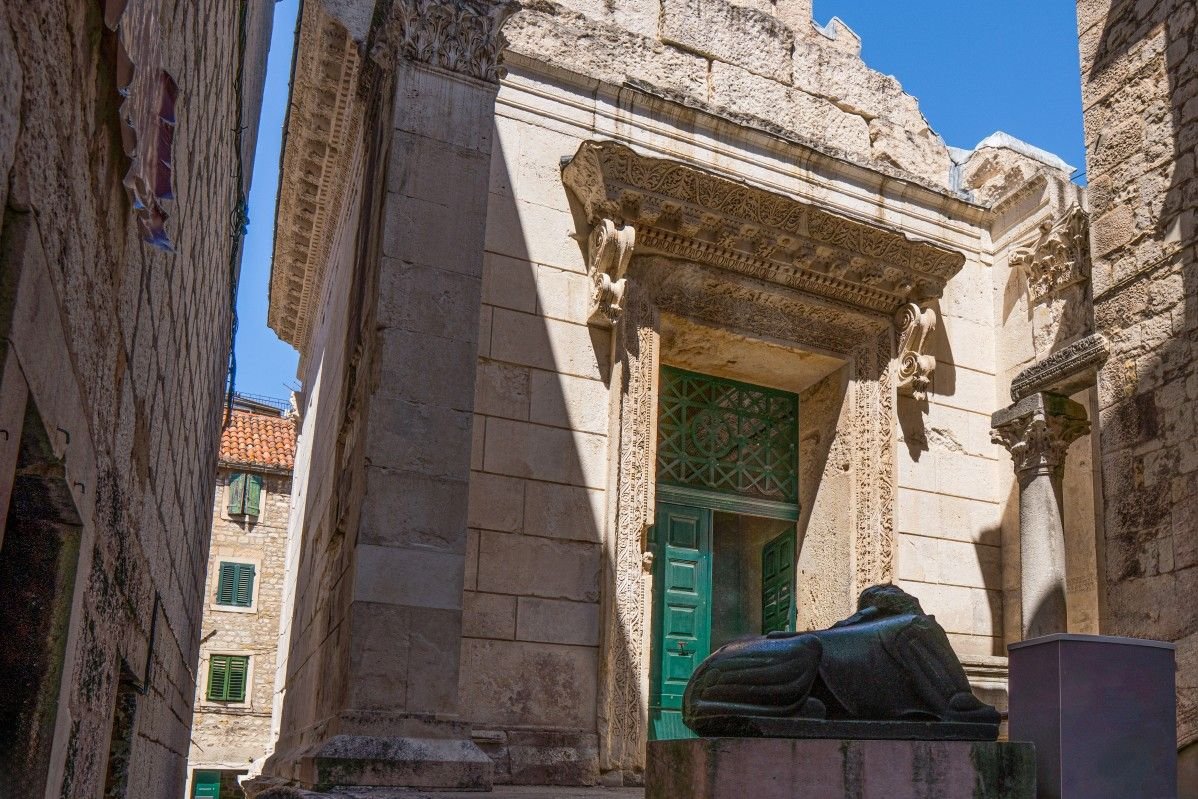
From the outside, the temple may look modest, but it is worth stepping inside. Its interior has preserved original elements, and the ceiling is decorated with details dating back to Roman times. It is one of the best-preserved places in the entire complex.
In front of the entrance stands a sphinx brought from Egypt, one of several imported here on the emperor’s orders. It is an interesting detail showing how powerful and vast the Roman Empire once was.
The Temple of Jupiter is easy to overlook, but it is definitely worth stopping by, even for a moment, to discover a less obvious side of Diocletian’s Palace.
Viewpoints in Split
Split is not only about monuments and the old town. Just a short walk from the centre reveals a wholly different side of the city, with more greenery, fewer people, and above all, amazing views of the Adriatic Sea and the rooftops of the old town.
Sustipan Park - the best place in Split
Sustipan is one of Split's less obvious places, yet one of its best viewpoints. This small park, located on a cliff above the sea, offers a wide panorama of the sea and nearby islands.
There used to be a cemetery here, which was removed in the 20th century. Today, no traces remain, and the area has been transformed into a green public space. It is quieter than the city centre, and you are more likely to meet locals than tourists. It is a great place for a short walk, a moment of rest, or simply sitting on a bench with a sea view.
Sustipan is best visited towards the end of the day, as the sunsets are especially beautiful here while crowds are still relatively small.
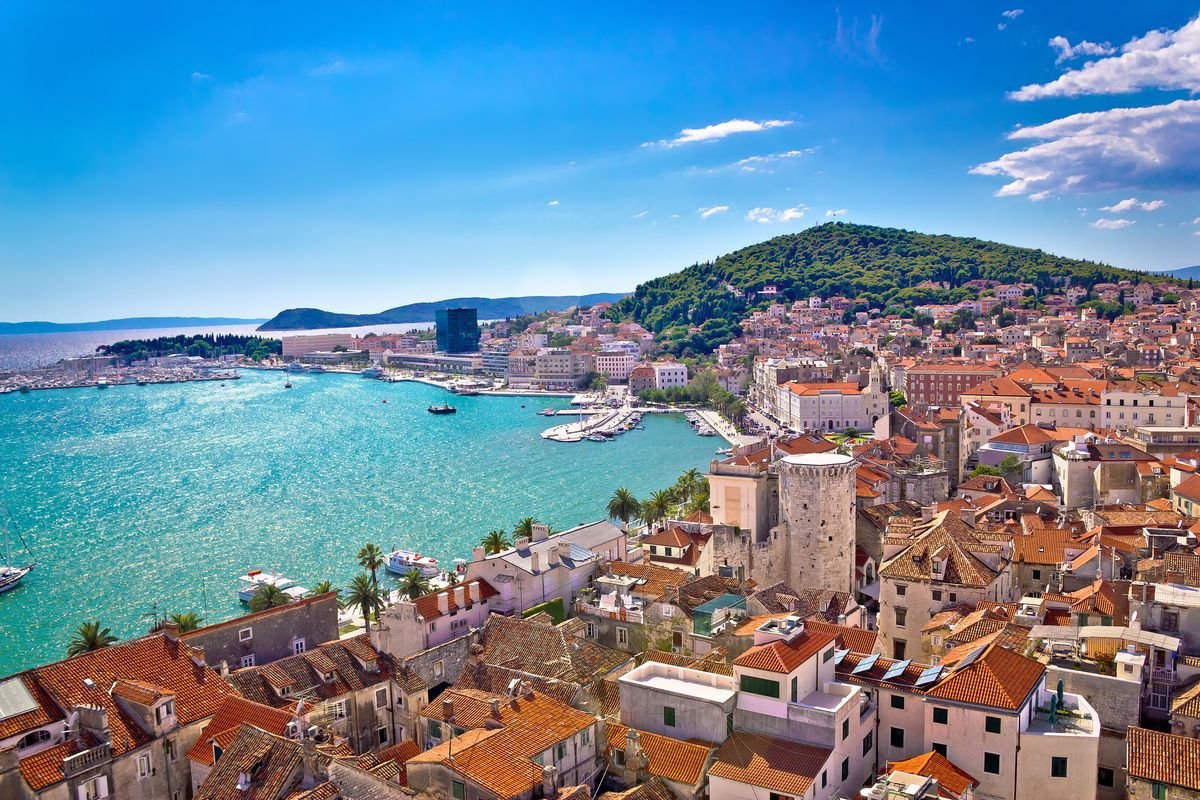
Marjan Hill
Marjan Hill is the largest green area in Split, where you can escape the city for a while. It is located west of the centre and is easily accessible on foot - the walk from Riva takes about 20-30 minutes.
This is not one specific place but an entire area with walking trails, viewpoints, and hidden coves. The most popular viewpoint is the platform near the stairs leading uphill, from where you can clearly see the old town, the port, and nearby islands.
If you have more time, it is worth walking further. The deeper you go, the quieter it becomes. Along the way, you will find small chapels, resting spots, and paths leading towards less crowded beaches.
It is a great place for both a short walk and a longer trip outside the city centre. Depending on your pace, you can spend an hour or half a day here.
You can also visit Marjan Hill with a guide, who will tell you about the places you pass and take you to the best viewpoints. Learn more here: https://seeplaces.com/excursions/croatia/split/marjan-hill-hiking-tour/
Beaches in Split - relaxing things to do in Split
In Split, you do not have to choose between city sightseeing and relaxing on the beach - here, the two naturally go together. Just a short walk or drive is enough to reach the Adriatic coast.
The beaches in Split are diverse: from sandy beaches to intimate coves surrounded by greenery. The choice mainly depends on what you are looking for a place to relax, swim, or enjoy a calmer atmosphere.
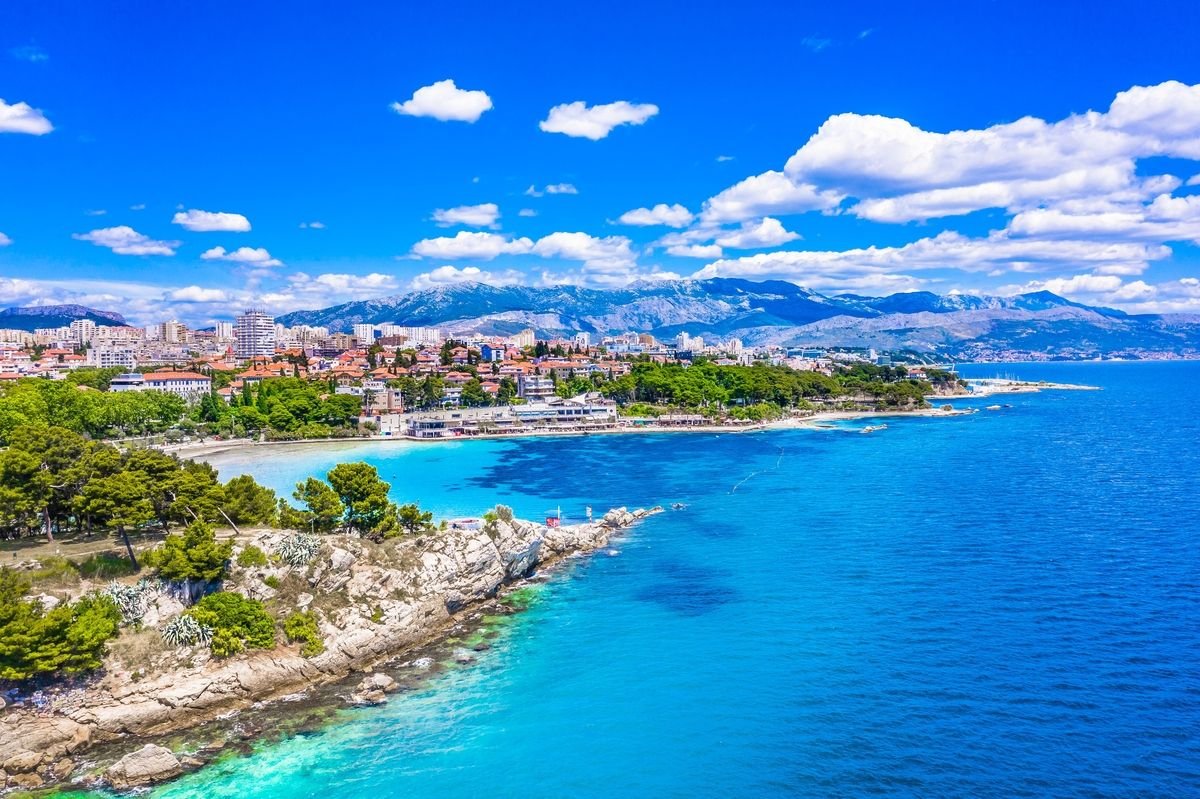
- Bačvice Beach - The most famous beach in Split, and one of the few sandy beaches in this part of Croatia. It is located close to the centre, making it easy to visit even during a short sightseeing break. The water is shallow and calm, so you should expect crowds, especially during summer.
- Kašjuni Beach - Located beneath Marjan Hill. It is a pebble beach with clear water and beautiful views of the surroundings. It is more peaceful, although still popular during the summer.
- Bene Beach - Situated within Marjan Park, away from the noise of the city. It is a good place for a quieter day, with more shade, fewer people, and a more intimate atmosphere.
- Firule Beach - A less crowded alternative to Bačvice, also located close to the centre. It has a gentle entrance into the water and a partially sandy seabed, making it comfortable for swimming. More often chosen by locals than tourists, which creates a calmer atmosphere.
Split holidays - what is worth knowing?
Split is a destination that can suit a wide range of travel styles. You can come here for a short city break, treat the city as a base for exploring Croatia, or spend your entire holiday combining sightseeing with beach relaxation.
The well-developed infrastructure and compact layout of the city make organising your trip relatively simple.
How to get to Split? How to get around Split?
The easiest and fastest way to reach Split is by plane. Split Airport (SPU) is located about 25 km from the city centre and offers connections with many European cities, especially during summer.
After arriving at the airport, you can reach the city centre by airport shuttle bus, taxi or private transfer, car rental, if you plan to explore the surrounding areas.
During the summer months, it is worth booking flights in advance, as prices and availability can change quickly.
Where to stay in Split? Accommodations in Split
The choice of accommodation in Split mainly depends on your travel plans.
- Old Town and Diocletian’s Palace area - The best location for sightseeing. Everything is nearby, but you should expect higher prices and heavier tourist traffic.
- Bačvice and Firule - A good combination of the city centre and beach access. A popular choice for holidays.
- Marjan and the surrounding areas - Quieter neighbourhoods, more greenery, and easy access to nature.
- More distant districts - Cheaper accommodation options, but they require commuting to the centre.
During summer, accommodation availability changes quickly, so booking in advance is the safer option.
What to eat in Split?
Croatian cuisine in Split is strongly influenced by the Mediterranean, so you can expect plenty of fresh seafood, olive oil, herbs, and simple but flavourful dishes.
One of the most popular local specialities is pašticada - slow-cooked beef served with gnocchi in a rich sauce made with wine and spices. Seafood lovers should try grilled squid, black risotto made with cuttlefish ink, or freshly caught fish served in seaside restaurants.
A traditional snack worth tasting is burek, a flaky pastry filled with cheese, meat, or spinach, often eaten for breakfast or as a quick lunch. In local bakeries and markets, you will also find Croatian cheeses, cured ham (pršut), and olives.
For dessert, it is worth trying fritule - small Croatian doughnuts typically served with powdered sugar. A glass of local Dalmatian wine or strong Croatian coffee is the perfect addition to a meal in Split.

Is Split, Croatia, worth visiting for a holiday? Split travel guide
Split is a destination that is difficult to define clearly, and that is its greatest advantage. On one hand, you have a city with a history dating back to Roman times, and on the other, access to the sea and a Mediterranean atmosphere that can be felt almost everywhere.
It is a great destination for both a short trip and a longer holiday. In one day, you can explore Diocletian’s Palace, walk along Riva, and later simply head to the beach. Few cities in Europe offer such variety.
Another big advantage is the location. Split works perfectly as a travel base, with easy access to islands such as Hvar or Brač, as well as other parts of Dalmatia.
Is it worth visiting? If you are looking for a place that combines sightseeing with relaxation and does not require complicated planning, definitely yes. Split is not “perfect” or postcard-like in every corner, but that is exactly what makes it feel more authentic.
_389209b585.svg)


