Culinary tours - tastings, cooking classes and local markets
Sometimes, the things you remember most from a holiday are the flavours and aromas - leaving you wanting to discover (and taste) even more! Culinary tours let you explore a region and its everyday customs while offering a break from traditional sightseeing. Where should you go for a culinary experience?
_1ed36f20b6.jpg)
Who are culinary tours for?
Culinary tours cover a wide range of experiences. They can include:
- tasting local products,
- a visit to a production site,
- a cooking class,
- a walk around a market,
- a guided tour with a culinary stop.
You do not need to be a food expert, a foodie, or plan your entire holiday around food. This type of sightseeing is a good choice if you enjoy trying new flavours, want to see more than the most popular attractions, or are simply seeking a few hours away from the hotel.
Culinary tour instead of another landmark?
It does not always have to be "instead". Often, the two ways of exploring complement each other well. In the morning, you can visit a museum or the historic city centre, then see how a regional product is made or go to a local market and buy ingredients to cook a local dish.
Food stops being just a meal and becomes part of the story of the region, its products, and everyday customs.
_936f0b4376.jpg)
Tastings
A tasting on holiday does not have to mean a long dinner in a restaurant. It can be a brief encounter with a local product, a story of how it is made, a display of old tools, or a walk around the city.
It is worth choosing tastings that show more than just the finished product on the plate. Information about ingredients, traditional production methods, or local recipes helps you better understand why a particular flavour is linked to that region.
A good example is the Nougat and Chocolate Museum in Catalonia. During your visit, you can learn about the history of nougat and chocolate, see historic confectionery machinery and a 1933 workshop reconstruction, and finish by tasting some sweets. It is a small attraction, but it clearly shows that culinary sightseeing can also be a history lesson.
A walking tour of Perugia offers a different experience. First, you explore the city's landmarks, including Corso Vannucci, and the culinary finale is a tasting of local products. This means food does not replace sightseeing but becomes a natural complement to it.
This is a particularly good choice when you have limited time. Even a short visit to a museum, artisan workshop, or local producer can bring something entirely different to your day than yet another photo in front of a landmark.
_11e31e310b.jpg)
Cooking class
If tasting alone is not enough for you, the next step is a cooking class. Here, you do not just discover ready-made dishes: you chop, mix, season, and learn how local ingredients are used.
Learning to cook from locals
In Hua Hin, a traditional cooking class in Thailand starts with a visit to a local market to buy ingredients. Participants then move into the kitchen, where they prepare three dishes and a dessert under the instructor's guidance. The programme also includes a tasting of the prepared dishes and a cookbook, so you can later try to recreate some flavours at home.
In Marrakech, the class takes place in a riad in the medina. During the class, participants prepare a four-course meal and learn about local spices and ingredients used in Moroccan cuisine. This is a good example of an experience where cooking itself becomes a way to connect more closely with the local culture.
You will find a similar idea in Sorrento - the class focuses on Italian cuisine and making fresh pasta. The programme also features products and dishes typical of the region, including mozzarella, olive oil, ravioli caprese, and aubergine alla parmigiana.
A cooking class has another advantage: it is an active experience. Instead of spending several hours just listening and watching, you make something yourself, and the result is a meal you have prepared with your own hands.
Local markets
Want to understand local cuisine from the very beginning? Go where the shopping starts. Markets showcase everyday products: fruit and vegetables, spices, sweets, cheese, olive oil, and local goods that can sometimes be difficult to find at a hotel buffet.
Visiting a market on holiday
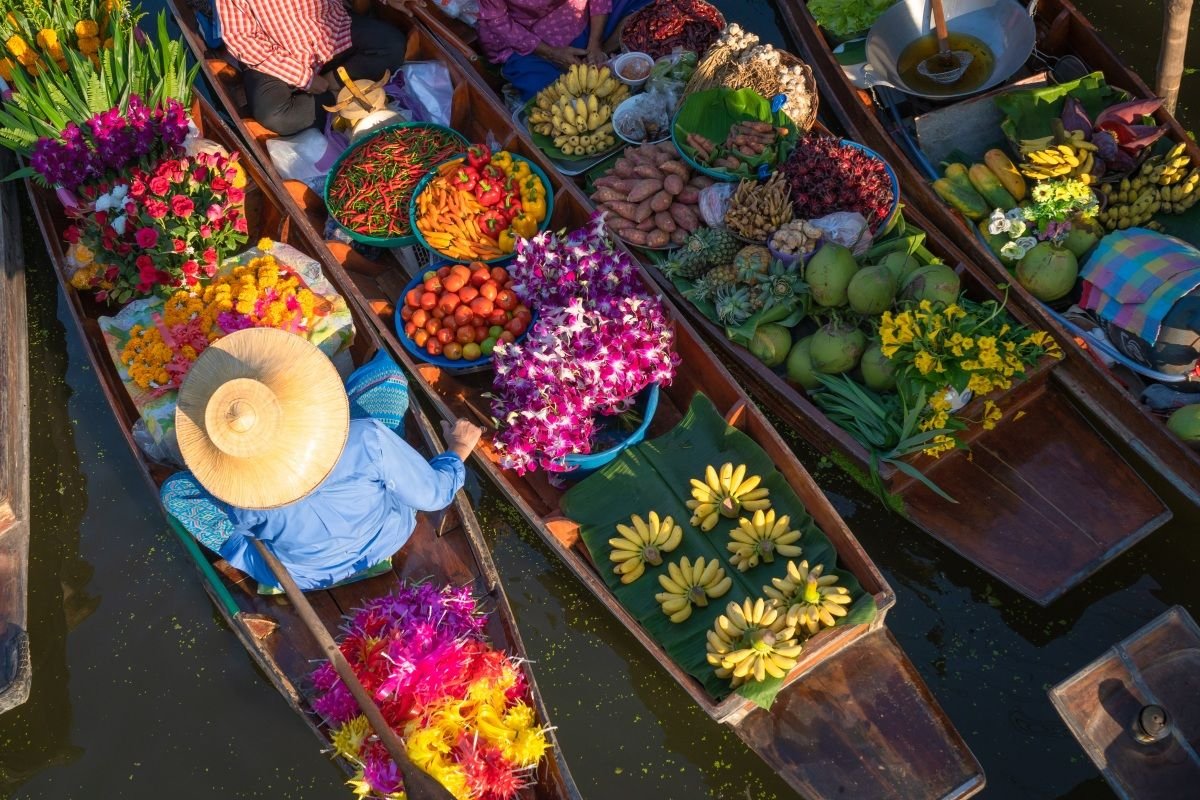
In Thailand, an interesting example is a tour from Hua Hin that includes two very distinctive places. Talad Rom Hup is a market crossed by railway tracks, while at the Damnoensaduak water market, vendors sell goods directly from their boats. You can see vegetables, fruit, and other local products, while those interested can try dishes from local restaurants.
_2b6e390246.jpg)
In Mallorca, meanwhile, the first stop on a tour of Formentor s the traditional market in Alcúdiis. The itinerary lists products such as olive oil, honey, almonds, and figs. Later, the plan changes completely, with views of the Formentor peninsula, a cruise around Pollensa Bay, and time on the beach.
A market does not have to be the main destination of a full-day tour. It can be one of its most local parts and a good way to see what is produced and bought in the region you are visiting.
Guided tours
Not every culinary tour has to be a cooking class or tasting. Sometimes, a classic guided tour simply needs to include a "delicious" stop.
_f32e1cff9b.jpg)
A good example is a tour in Crete combining a cruise to Spinalonga, a visit to Agios Nikolaos, and a stop at a family-run olive oil factory. After touring the island and town, you can see how olive oil is made, learn more about its production, and buy local delicacies directly from the producer.
You will find a similar combination on the French Riviera, where the culinary stop is a Provençal market in Antibes. The stalls feature local products, spices, and fresh fruit. Importantly, the market is only one stop on a full-day route - afterwards, you can continue the classic tour of the coast, including Cannes and Saint-Paul-de-Vence.
This option is for people who do not want to choose between landmarks and cuisine.
Summary
Culinary tours are a good way to add variety to your holiday plans. One day you can visit landmarks, the next learn to prepare a local dish, and the day after browse stalls filled with products you have never encountered before.
The point is not to turn your entire holiday into a culinary journey. Sometimes, a single tasting, cooking class, or visit to a local producer is enough to come home not only with photos but also with a new flavour, recipe, or story you will genuinely remember.
_d1d09a0feb.jpg)
- 01.09.2026
Read also: Where to go for a city break in Europe?
A city break is a great way to escape everyday life, see somewhere new and come back with your head full of memories.
Read more_389209b585.svg)


