Luxor travel guide - Valley of the Kings, Karnak and ancient temples
Luxor is the heart of ancient Egypt, filled with countless landmarks to explore. On both sides of the Nile, you will discover temples and necropolises of pharaohs. Discover what to see in Luxor and plan your trip!

Thebes - the former capital of Egypt
Thebes was the capital of Egypt during the Middle and New Kingdom periods, and its importance extended far beyond the Nile Valley. It was here that the cult of the god Amun-Ra flourished, and his religious and political power established Thebes as the heart of the country. The city was known as the “city of a hundred gates”, symbolising its greatness, monumental temples, and immense wealth.
Thebes stretched across both sides of the Nile. The eastern bank was the centre of daily life and religious ceremonies; it was home to the largest temples, such as Karnak and Luxor Temple. The western bank was dedicated to the dead - vast necropolises were created there, including the Valley of the Kings and the Valley of the Queens, as well as mortuary temples and tombs of nobles.
The city lived to the rhythm of ceremonies and festivals, the most famous being the Opet Festival. During this celebration, the statue of Amun was carried in a ceremonial procession from Karnak to Luxor Temple, symbolising the renewal of the pharaoh’s power and divine order.
Although Thebes was once immense, its full extent is difficult to grasp today, as many structures have disappeared, been buried under sand, or replaced by newer settlements. Today, Luxor and Karnak stand where the legendary Thebes once existed. Walking through their streets, you are literally stepping in the footsteps of ancient Egyptian history.
Things to do in Thebes
- Temple complexes - on the eastern bank of Thebes, religious life and the cult of Amun-Ra flourished. Here you will find, among others, the Karnak Temple and Luxor Temple.
- Necropolises and tombs - on the western bank lie the Valley of the Kings and the Valley of the Queens.
- Temple of Hatshepsut - a monumental structure built for one of the few female pharaohs.
- Colossi of Memnon - two gigantic statues that once guarded the entrance to the temple of Amenhotep III.
- Medinet Habu - the mortuary temple of Ramses III, known for its rich reliefs.
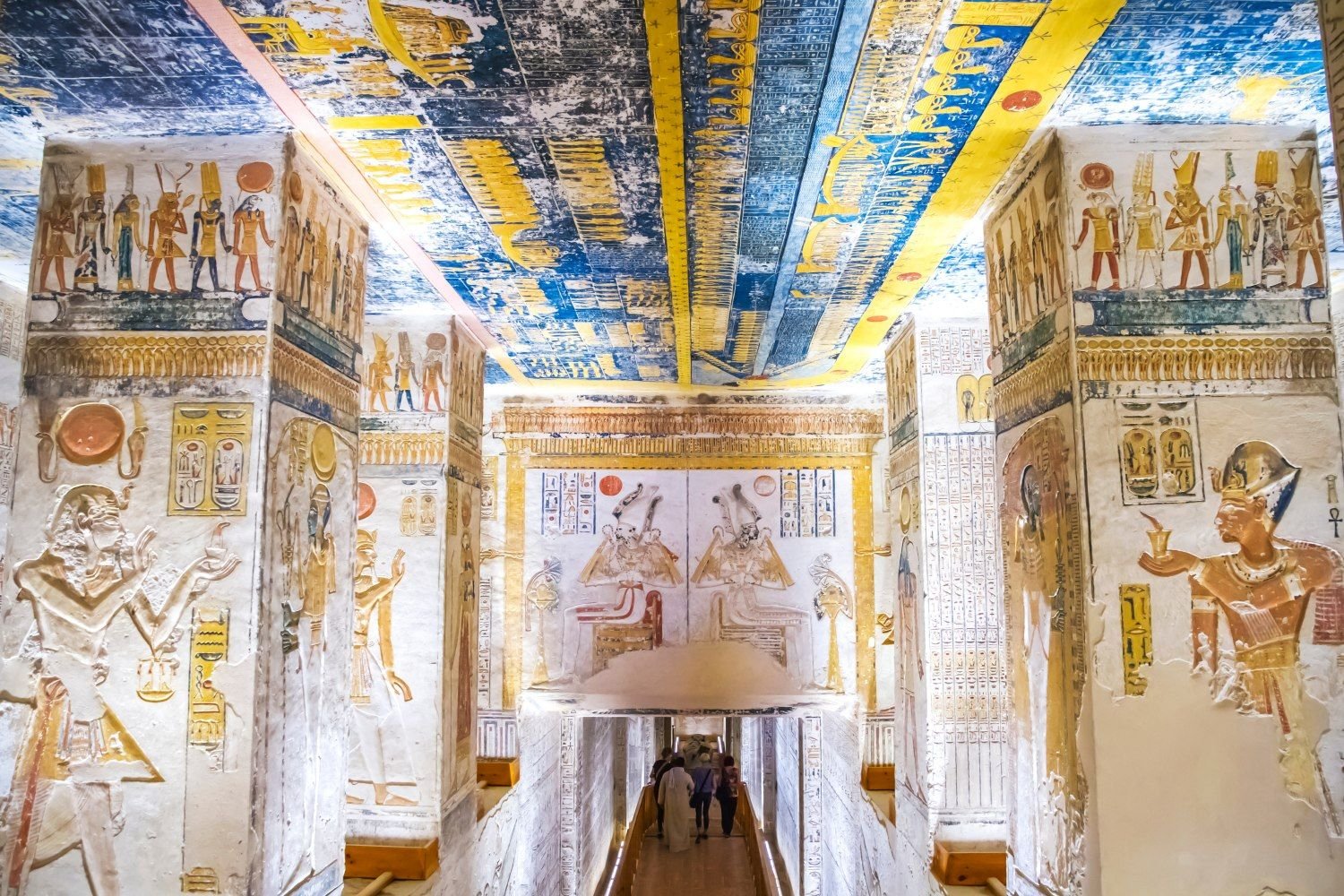
Valley of the Kings - the best place to start exploring Luxor
The Valley of the Kings is one of the most fascinating places in Egypt. Located on the western bank of the Nile, near Luxor, it served for centuries as the burial site of pharaohs and the most important figures during the New Kingdom (approx. 1550-1070 BC). More than 60 tombs were carved into the rock and underground, many of which can still be visited today.
During your visit, you will see impressive corridors and chambers adorned with paintings intended to guide the souls of pharaohs into the afterlife. Each tomb is different - some impress with their size and richness of decoration, while others stand out for their simplicity and symbolism. The tomb of Thutmose III resembles an unfurled papyrus scroll, while the tomb of Ramses II features paintings and carvings depicting scenes from his life. Unfortunately, most tombs were looted in antiquity, so only a few (such as the tomb of Tutankhamun) were discovered intact.
Visits to the Valley of the Kings operate on a rotation system to protect the paintings from damage. Not all tombs are open at the same time, so it is worth checking in advance which ones are currently accessible. On the other hand, this means every visit can be slightly different, and discovering the secrets of ancient Egypt never becomes boring.
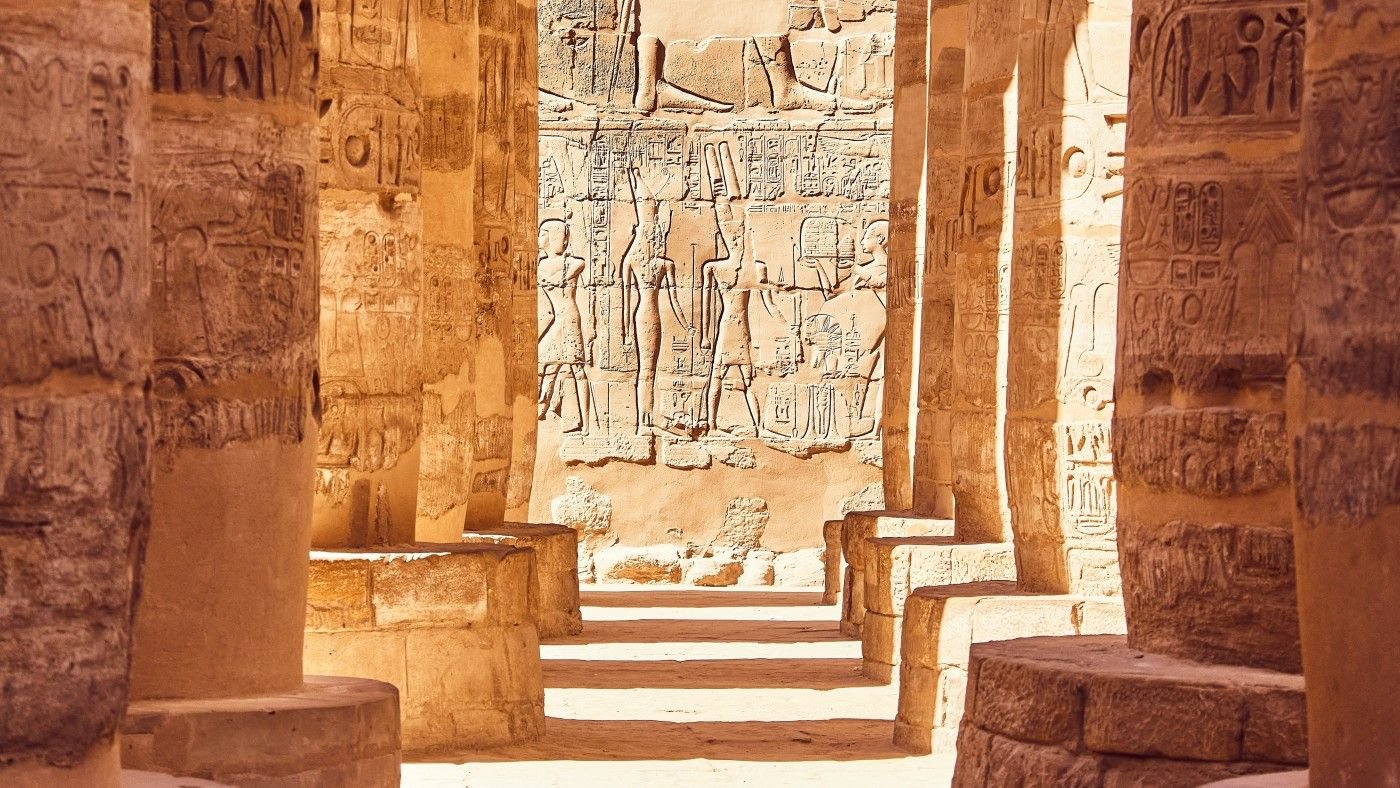
Discover the Karnak Temple and the Hypostyle Hall
Karnak is a vast sacred complex that was expanded over centuries by successive pharaohs. Its original name was Ipet-isut, which translates as “The Most Select of Places”.
It was once part of Thebes, on the eastern bank of the Nile, and today it is located about 2.5 km north of Luxor.
Construction of the Karnak temple began around 2000 BC, over 4,000 years ago, during the Middle Kingdom. The largest expansions occurred between the 16th and 11th centuries BC (New Kingdom), and work continued into the Greco-Roman period, up to the 1st century AD. Within the complex, you can find inscriptions, reliefs, and structures built by, among others, Queen Hatshepsut and pharaohs Thutmose III, Seti I, and Ramses II.
The central part of the complex was dedicated to Amun and surrounded by other areas devoted to the goddess Mut and the war god Montu.
The most famous element, however, is the Great Hypostyle Hall - an enormous space filled with 134 columns, the tallest reaching 24 meters in height. The reliefs and inscriptions on the columns depict ritual scenes, battles, and the achievements of the pharaohs, forming a kind of chronicle of Egyptian history. The paintings were once decorated with vivid polychrome colours, some of which have survived to this day in higher sections.
Karnak once housed as many as 20 temples, along with kitchens, workshops, and shops.
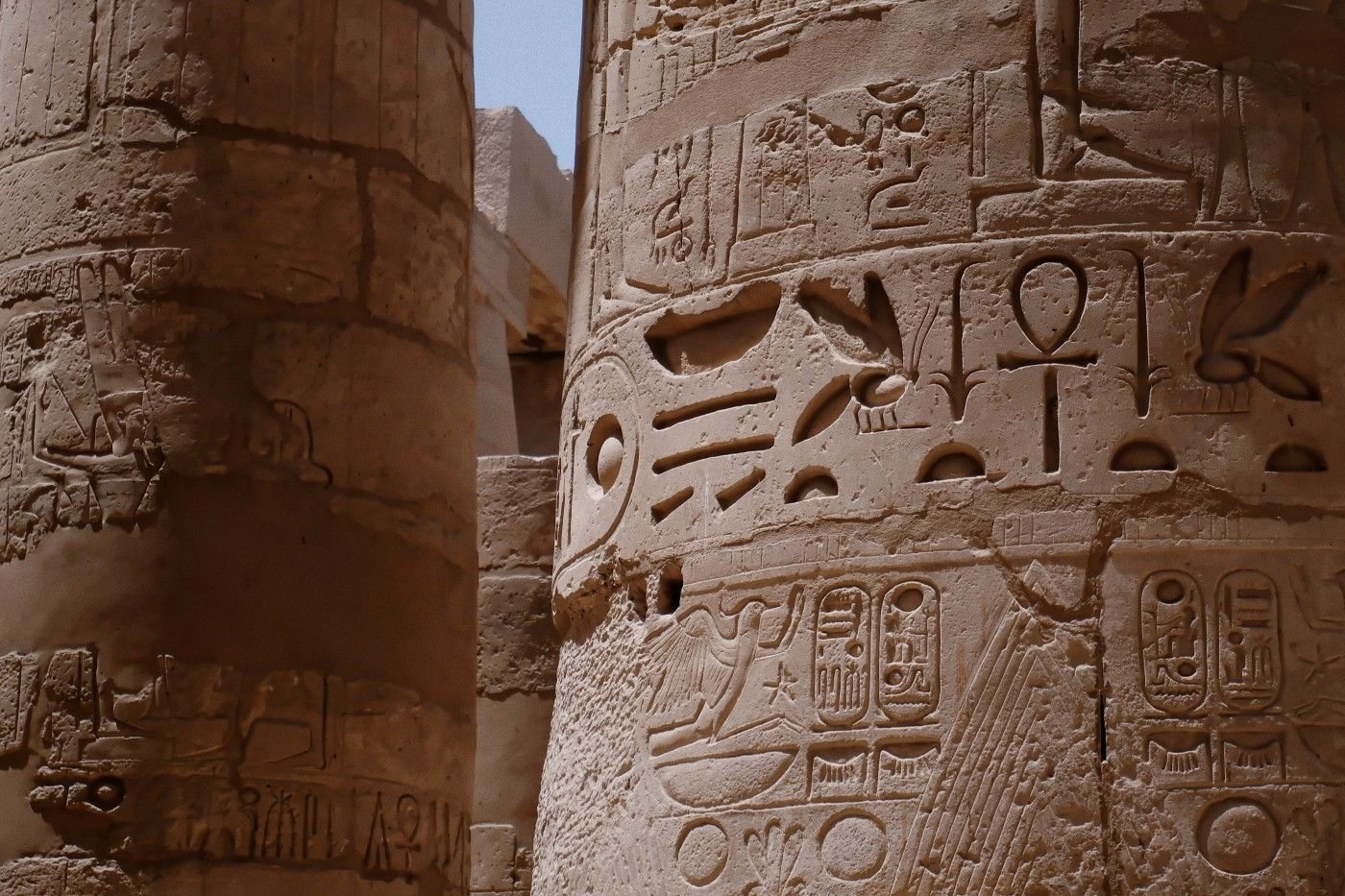
What is worth seeing in Karnak?
- Pylons (gateways) leading deeper into the temple.
- Reliefs and inscriptions depicting triumphs, ceremonies, and festival processions
- The Great Hypostyle Hall with hundreds of columns.
- The Sacred Lake is used for rituals.
- The White Chapel of Thutmose I, a masterpiece of ancient craftsmanship.
- Fragments of obelisks, some of which were never completed.
- Ruins of smaller temples and chapels are scattered around the main complex.
Colossi of Memnon
On the western bank of the Nile, near Luxor, stand two monumental statues known as the Colossi of Memnon. Each is about 18 meters tall and represents Pharaoh Amenhotep III, who ruled in the 14th century BC.
The statues originally guarded the entrance to temple, which was one of the largest structures of ancient Egypt, but today only the colossi remain - the rest was destroyed by floods, earthquakes, and later dismantling.

Each statue was carved from a single block of quartzite, transported from quarries hundreds of kilometres away. This is an impressive engineering achievement, considering each weighs around 800 tons.
The Legend Surrounding the Colossi of Memnon
After an earthquake in 27 BC, one of the statues cracked and began emitting sounds at sunrise, likely due to the stone's heating and expansion. The Greeks and Romans believed the statue was “singing” and associated it with the Memnon, son of the goddess Eos, who died at Troy - this is how the name originated. The sounds stopped after restoration during the reign of Emperor Septimius Severus in the 3rd century AD.
Temple of Hatshepsut - the tomb of a queen
Set against steep cliffs in Deir el-Bahari, on the western bank of the Nile, stands the rock-cut Temple of Hatshepsut. Built in the 15th century BC at the orders of Queen Hatshepsut, it is one of the finest examples of New Kingdom monumental architecture.
The temple was designed by the royal architect Senenmut and is distinguished by its unique terraced form. It consists of three levels connected by ramps, harmoniously blending into the surrounding cliffs. This was an innovative solution at the time - instead of massive structures, a lighter, rhythmic composition of colonnades and open spaces was created.

The temple served both as a place of worship for Hatshepsut after her death and as a sanctuary dedicated to the god Amun. Its interiors are decorated with magnificent reliefs, including scenes of the famous expedition to the land of Punt - a trading mission during which the Egyptians brought back exotic goods, plants, and animals.
The temple was also the site of important religious ceremonies, including the Beautiful Festival of the Valley. Reliefs also depict the divine birth of Hatshepsut, intended to legitimise her rule as pharaoh.
After her death, her successor, Thutmose III, attempted to erase her legacy, destroying many inscriptions and statues. Despite this, the temple has survived in good condition and continues to impress visitors with its monumental scale.
Polish archaeologists in Temple of Hatshepsut
Since the 1960s, specialists from the Polish Academy of Sciences have been working on excavations under the leadership of Professor Kazimierz Michałowski and, later, his successors. Thanks to their work, not only were additional parts of the temple uncovered and preserved, but also parts of the colonnades and chapels were reconstructed, restoring the site to its former glory.
Valley of the Queens - lesser-known attractions of Luxor
Near the Valley of the Kings lies the lesser-known but equally fascinating Valley of the Queens. This is where the wives of pharaohs, their children, and members of the royal family were buried. In ancient times, the place was called Ta-Set-Neferu, meaning “The Place of Beauty” - a name that perfectly reflects the character of this valley hidden among the rocks.
The necropolis was used during the 19th dynasty (13th century BC). There may have been over 90 tombs. Although they are not as monumental as those in the Valley of the Kings, they stand out for their rich decoration and colourful paintings.
The most famous tomb belongs to Queen Nefertari, wife of Ramses II. It is considered one of the most beautiful tombs in all of Egypt. The walls and ceiling are covered with vibrant scenes from the “Book of the Dead”, and Nefertari herself is depicted as a goddess, guided by deities into the afterlife. Due to the paintings' exceptional artistic value and the need to protect them, access to the tomb is strictly limited and requires a separate ticket.
The Valley of the Queens also hides other interesting sites, such as the tombs of the sons of Ramses III, where you can see scenes of daily life and symbolism related to the journey to the afterlife. Many of them are less visited by tourists, which makes exploring the valley feel more intimate and authentic.
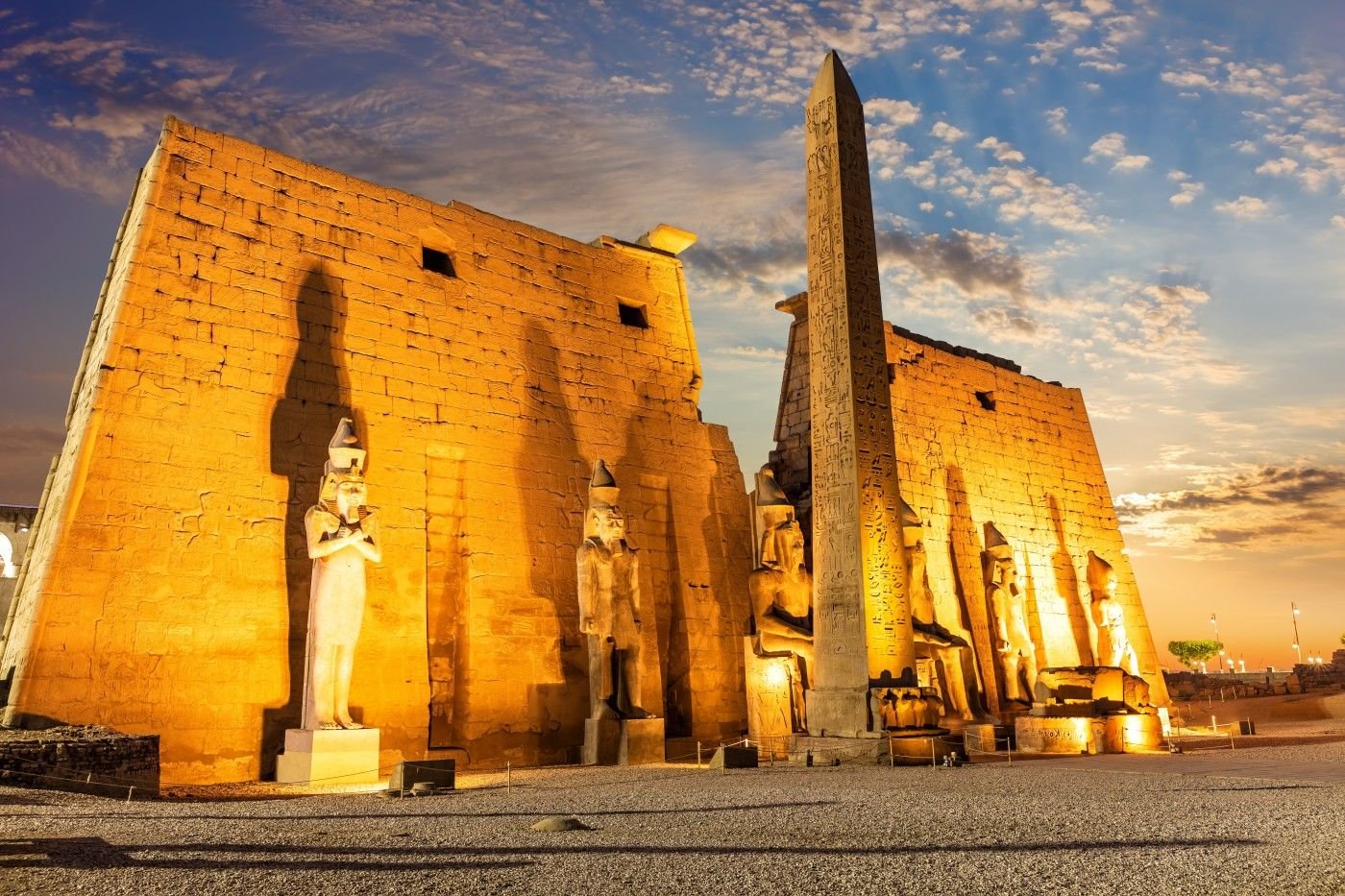
Luxor Temple
Luxor Temple was built in the 14th century BC on the orders of Pharaoh Amenhotep III and later expanded by Ramses II. It had a symbolic function and was associated with the renewal of royal power and the affirmation of the pharaoh’s divine origin.
The most important ceremony held here was the Opet Festival. During this event, a procession of priests carried statues of the gods Amun, Mut, and Khonsu from Karnak to Luxor Temple. This symbolised the renewal of the pharaoh’s strength and the maintenance of harmony between the human and divine worlds.
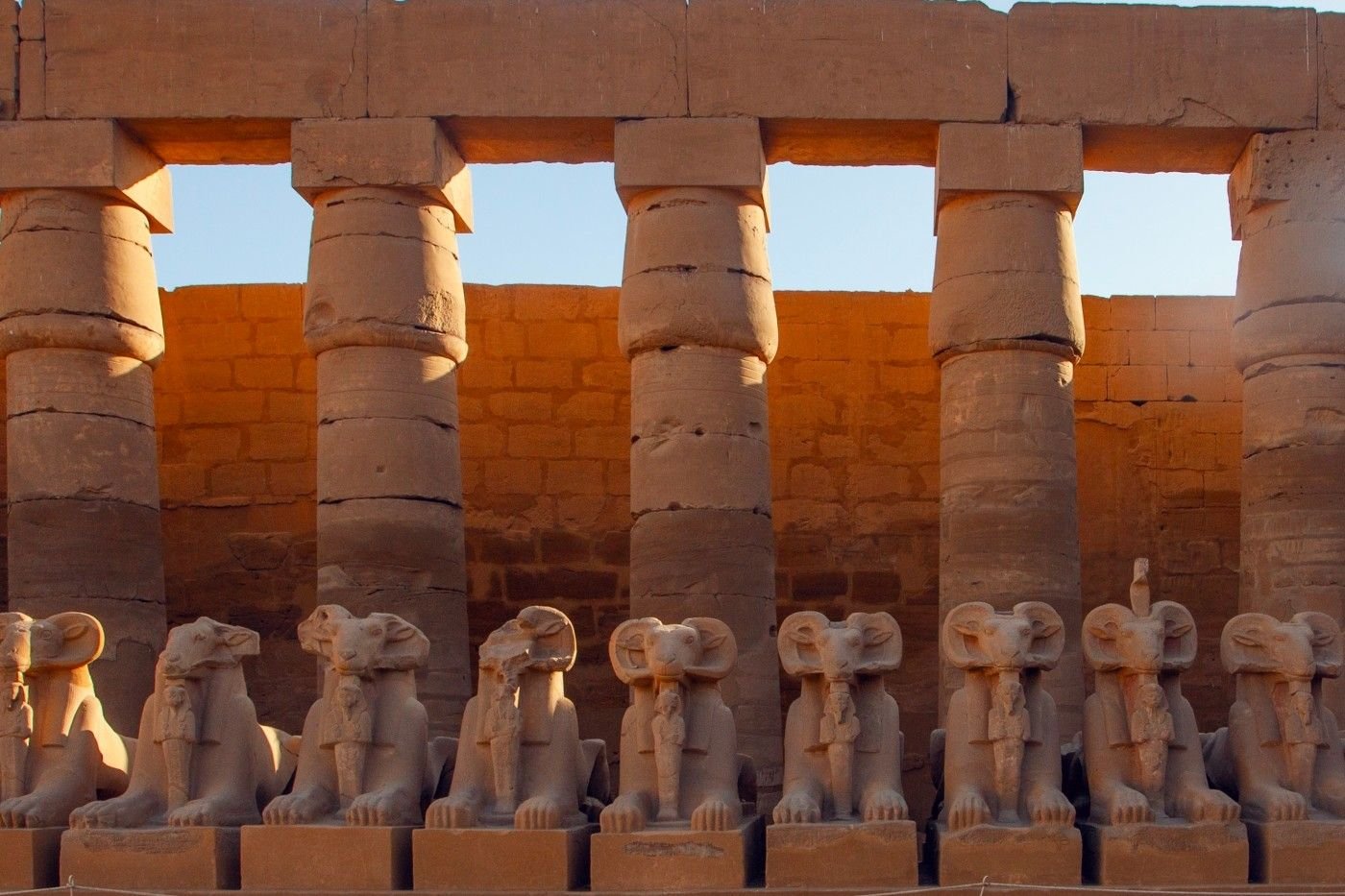
To this day, the monumental elements of the complex are impressive: the grand avenue of sphinxes connecting Karnak and Luxor (about 3 km long), massive pylons decorated with reliefs, and colossal statues of Ramses II standing at the entrance. Originally, two obelisks stood before the pylon - today, one is in Paris at Place de la Concorde, while its twin still towers over the temple entrance.
Luxor Temple was also a place where different cultures met. During Roman times, a legionary chapel was built here, and later, in the Christian era, part of the colonnade hall was converted into a church.
Today, inside the temple, you can still see the Abu al-Haggag Mosque, which has been in continuous use since medieval times - a unique example of uninterrupted religious life in the same place for thousands of years.
Medinet Habu - in the footsteps of a pharaoh’s power
Medinet Habu is the site of the mortuary temple complex of Ramses III, along with the temple of Thutmose III and chapels dedicated to the god Amun. It is located on the western bank of the Nile in Luxor.
Built in the 12th century BC, it served not only as a place of worship for pharaohs and gods but also as an administrative and economic centre. The entire complex was surrounded by high defensive walls, making Medinet Habu resemble a fortified district.
The temple is famous for its exceptionally well-preserved reliefs depicting scenes from the life of Ramses III. The most famous show his victories over the Sea Peoples - mysterious invaders who attempted to enter Egypt in the 13th and 12th centuries BC. Thanks to these reliefs, historians have been able to reconstruct the course of one of the battles of antiquity.
The interiors of the ruins are decorated with colourful paintings that have retained their intensity despite more than 3,000 years passing. On the walls, you can see both ritual and offering scenes, as well as depictions of everyday life at the pharaoh’s court.
_bcfe7a0943.jpg)
What to see in Luxor? The best attractions!
Luxor is one of the most important places on the map of Ancient Egypt. The former Thebes was the country's capital and the centre of the cult of Amun-Ra, and today its legacy continues to impress travellers from all over the world.
Luxor is an open-air museum. Every step here takes you through thousands of years of history, which continues to fascinate travellers to this day. If you are planning a trip to Egypt with a professional guide, this is the place where you will truly feel the spirit of the ancient world.
_389209b585.svg)


