Milan attractions. What are the must-see sites in Milan?
Milan is not only the capital of fashion and design, but also a city of extraordinary history, full of monuments, art, and modern architecture. It is often chosen for a short city break - nice weather, easy access, and much to see. Find out what attractions in Milan you must see.
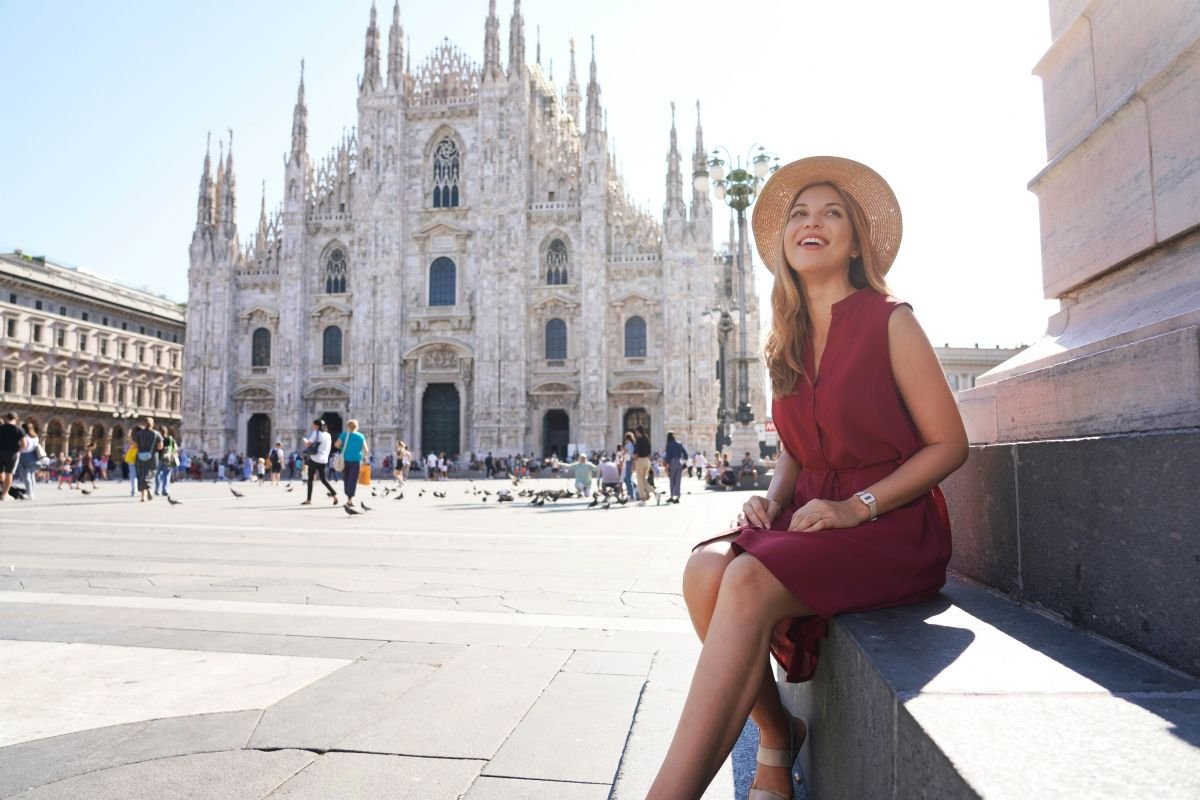
A short history of Milan
Milan, or Milano, is a city with over 2,000 years of history that has played an important role in Italy and throughout Europe. In Roman times, it was one of the most significant administrative centres; it was here in 313 that Emperor Constantine the Great announced the Edict of Milan, which guaranteed freedom of religion for Christians. After the fall of Rome, Milan became the seat of dukes and powerful families, including the Visconti and Sforza families, who transformed the city into a Renaissance pearl. It is from their time that, among others, the monumental Sforza Castle (Castello Sforzesco) and the works of Leonardo da Vinci, who lived and worked in Milan for years, originate.
In subsequent centuries, Milan was under Spanish and Austrian rule, and later, after Italy's unification, it became a symbol of the country's modernity and industrial development. Today, Milan is Italy's second-largest city, after Rome, with a population exceeding 1.3 million. Every year, it attracts over 10 million tourists from around the world. Along with Rome and Venice, it forms the trio of the most important Italian tourist destinations.
Milan is also recognised as the world's fashion capital and Italy's financial and economic centre. The headquarters of the Italian Stock Exchange (Borsa Italiana) and of the largest corporations, including banks, insurance companies, telecommunications companies, and media companies, are located here.
Milan - TOP 7 must-see
The heart of Milan is Piazza del Duomo, a bustling square that symbolises the city and is the best place to start sightseeing. History, art, architecture, and the daily life of residents meet here. Around the square are the city's most essential monuments, including the monumental Milan Cathedral, the elegant Palazzo Reale, and the famous Galleria Vittorio Emanuele II, known as the "drawing room of Milan".
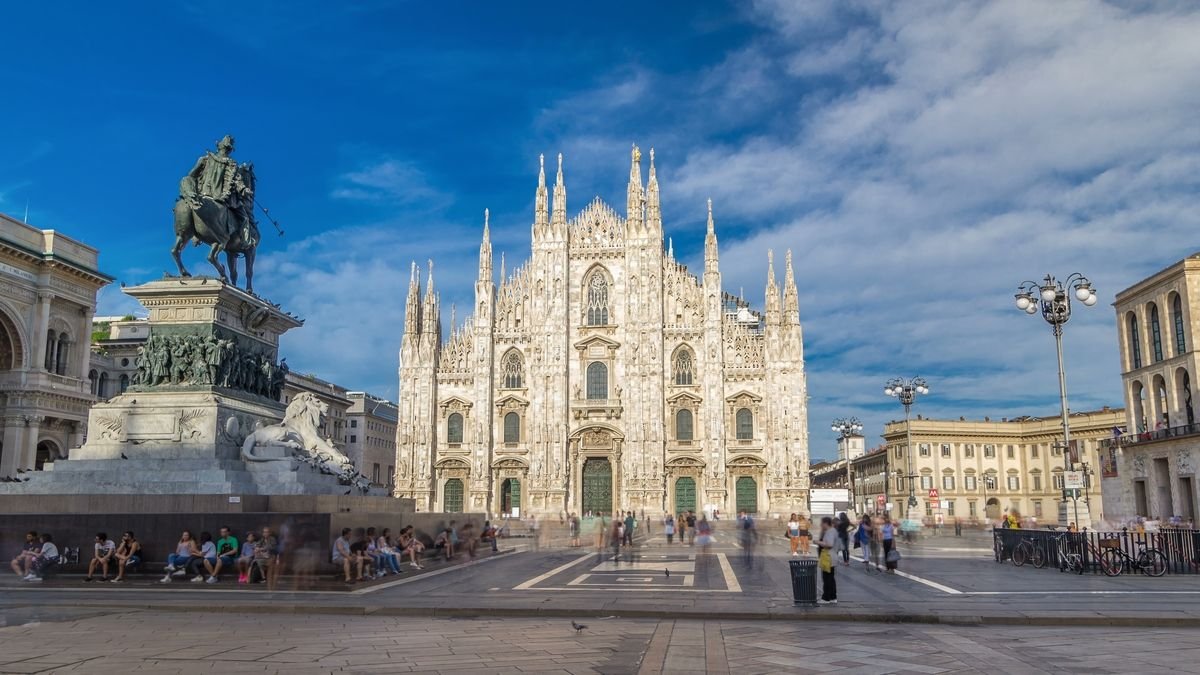
Piazza del Duomo
This is the city's main square and one of Italy's most recognisable places. It was created in the 14th century, and today it is surrounded by impressive buildings from various eras. At the centre stands the monument to King Vittorio Emanuele II, and around the square, tourists, street musicians, and photographers gather every day. From this place, there is an excellent view of the Milan Cathedral's facade, which dominates the entire panorama.
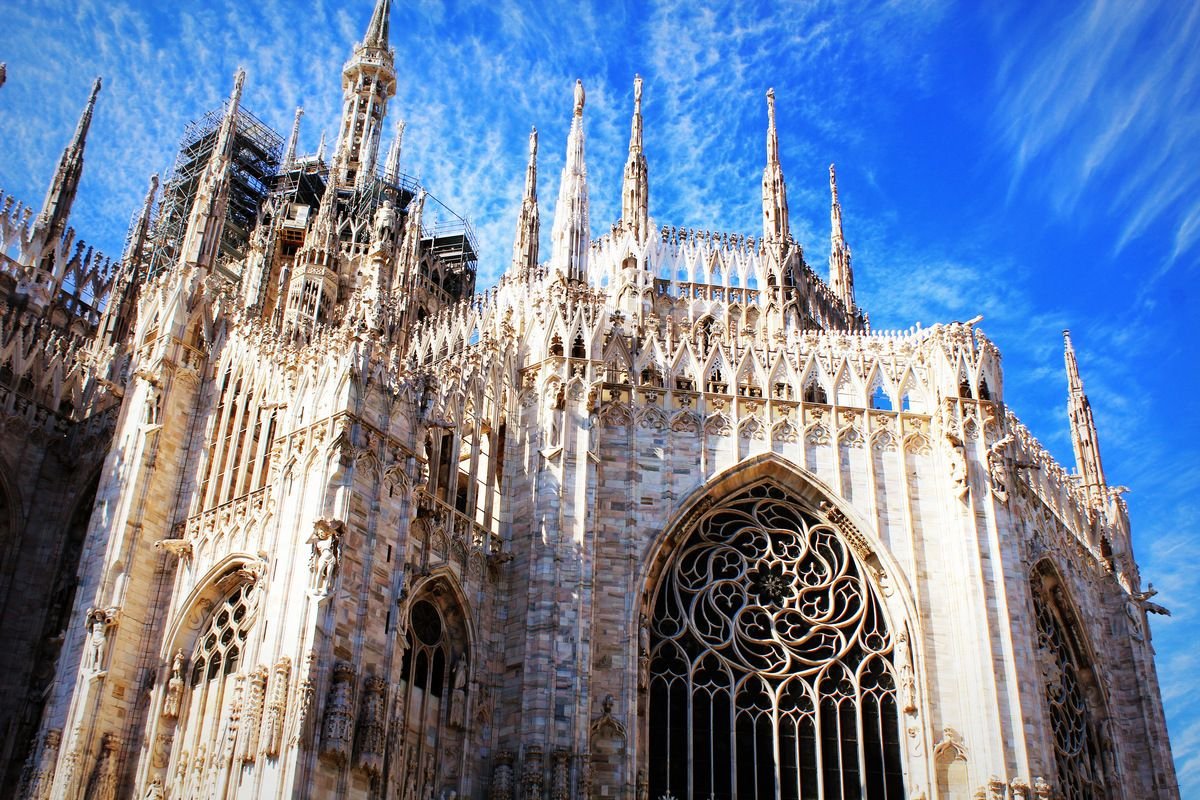
Milan Cathedral - Duomo di Milano
A symbol of the city and one of the largest Gothic temples in the world. The construction of the Milan Cathedral (Duomo di Milano) lasted nearly six centuries, from the 14th to the 19th century. The temple impresses with an intricate white marble facade, hundreds of turrets and sculptures, and from its roof, an extraordinary panorama of the city unfolds.
Inside, it is worth seeing the colourful stained-glass windows, the relics of St. Charles Borromeo, and the legendary nail from the Cross of Christ. Entrance to the cathedral is paid - tickets can be bought online, so you can skip the queue. Several ticket versions are available: combined with other monuments and for different parts of the building.
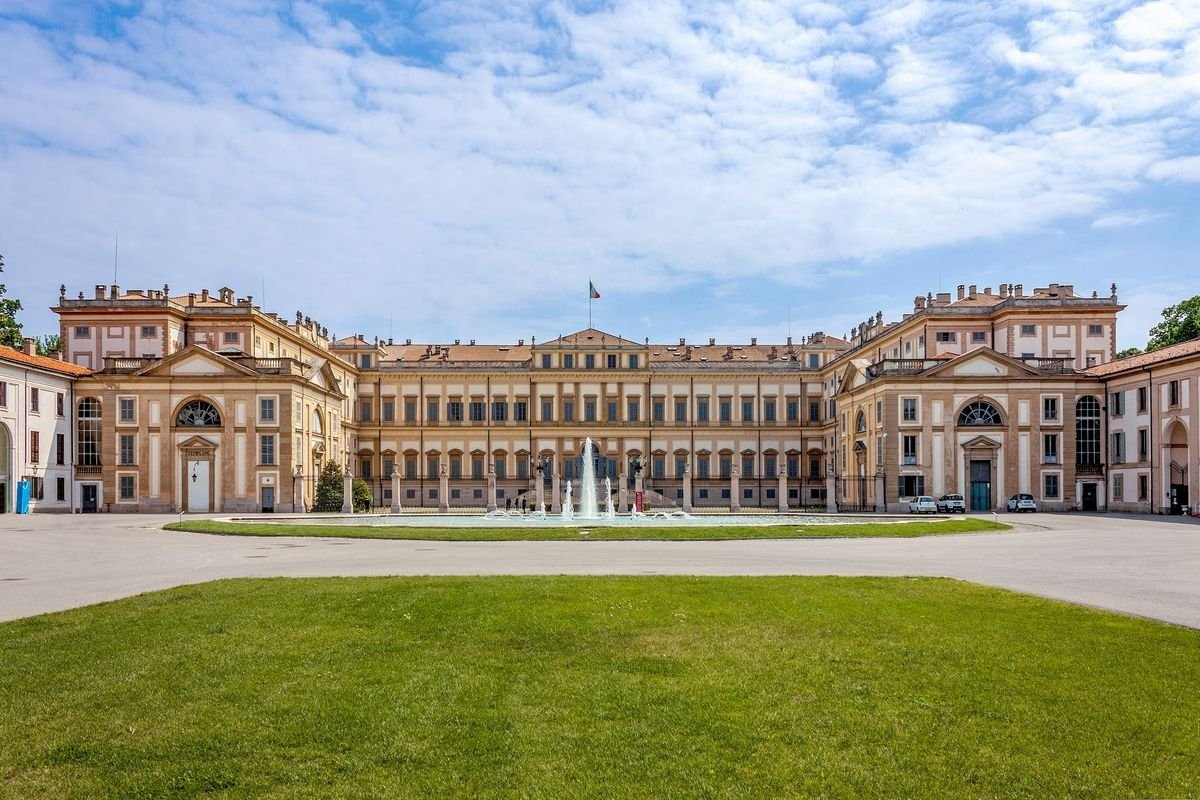
Royal Palace - Palazzo Reale
For hundreds of years, Palazzo Reale was the seat of Milan's government. Already in the Middle Ages, it served as the seat of the Visconti dukes, and later the residence of the powerful Sforza family. In the 18th century, the palace was rebuilt in the neoclassical style by Giuseppe Piermarini, the same architect who designed the famous La Scala. In Napoleonic times, Palazzo Reale became the official seat of the viceroys of Italy, and its interiors were decorated with rich frescoes, marble columns, and gilding. Unfortunately, during World War II, the building was severely damaged, but it was carefully rebuilt over the years, preserving its former splendour.
Today, Palazzo Reale is one of the most important exhibition centres in northern Italy. Prestigious temporary exhibitions take place here - from the works of Caravaggio and Van Gogh to contemporary photography and design. Interestingly, some rooms still retain original decorations from the times when royal guests were received here.
Galleria Vittorio Emanuele II
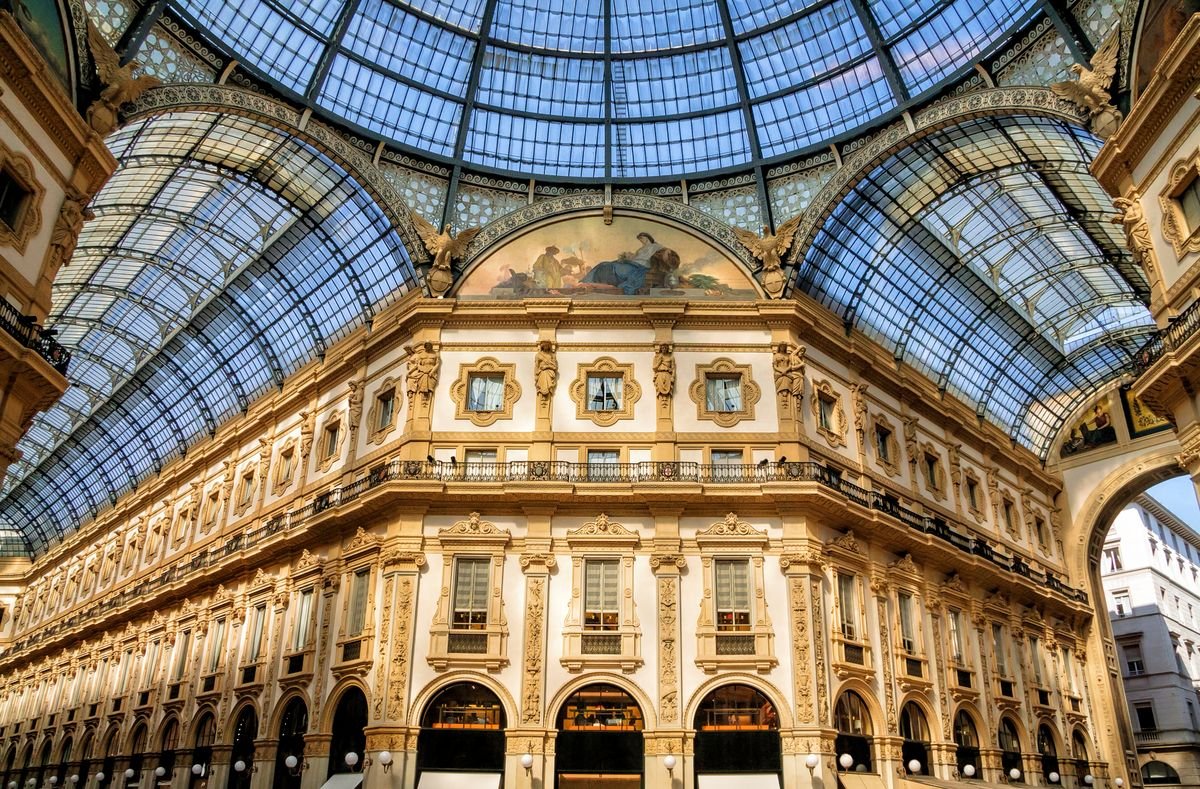
Designed by Giuseppe Mengoni, Galleria Vittorio Emanuele II opened in 1867 and is still known as the world's most beautiful shopping arcade. It is located in the city centre, connecting Piazza del Duomo with Piazza della Scala, and also serves as a symbol of modern Milan in the 19th century.
Galleria Vittorio Emanuele II impresses with a huge glass dome, mosaic floors, and elegant facades. The famous bull mosaic is located here, which, according to tradition, brings luck to everyone who, standing on it, turns three times on their heel.
You will find Prada, Versace, and Louis Vuitton boutiques here, as well as the iconic Camparino in Galleria café, opened in 1915.
Ferrari Store Milan
Right next to the Galleria Vittorio Emanuele II is the Ferrari Store Milan - a combination of a museum and a boutique entirely dedicated to the legend of Italian automotive. You can see models of iconic cars, Formula 1 simulators, and collections of Ferrari clothes and gadgets here.
It is an interesting contrast to the surrounding history, as the spirit of Italian tradition and the contemporary passion for speed and innovation meet in one place. Ferrari Store Milan is a must-visit point on the map for every fan of four wheels!
Castello Sforzesco - Sforza Castle
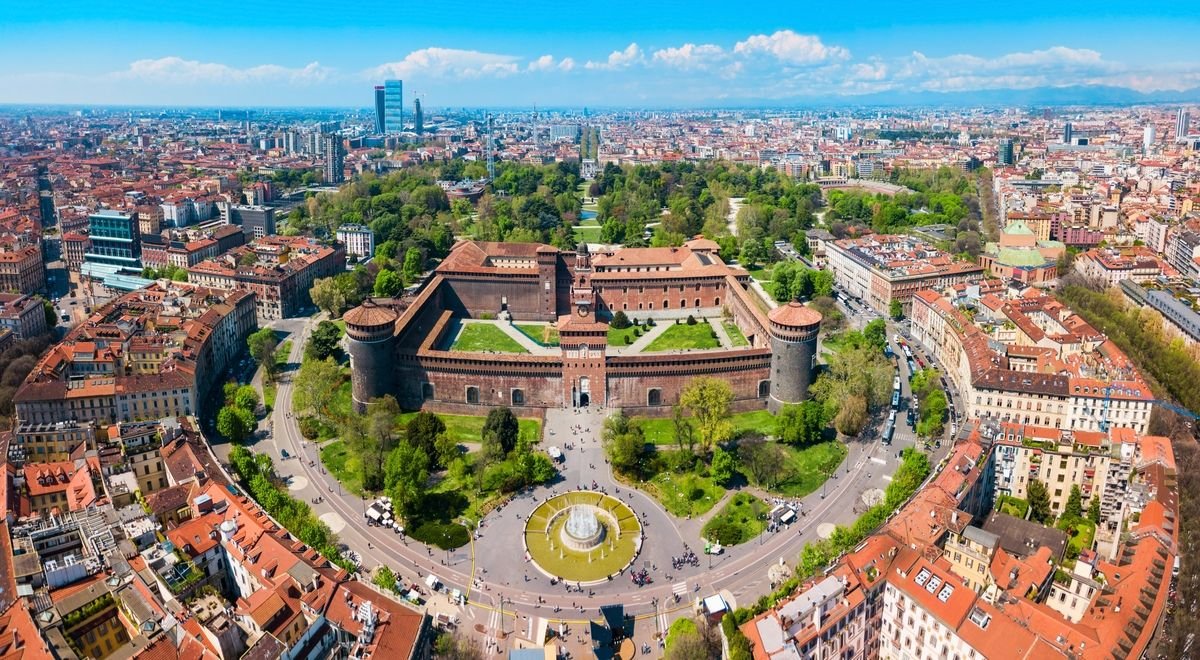
Castello Sforzesco is a pearl of Milan. The castle was built in the 14th century by the Visconti family and later expanded by the Duke of Milan, Francesco Sforza, who made it his residence.
For centuries, it served defence, representative, and cultural functions; the walls were decorated by artists such as Leonardo da Vinci and Bramante. In the Renaissance, the castle was one of the most interesting courts in Europe, featuring a grand garden, beautiful frescoes, and art collections.
Today, its walls house several museums and galleries, including the Museo d’Arte Antica with the Pietà Rondanini sculpture - the last, unfinished work of Michelangelo. Other facilities include the Egyptian Museum, the Museum of Musical Instruments, and the Museum of Applied Art. When you are in the area, at least look into the castle courtyard, where entry is free.
Parco Sempione
Right behind the castle lies the green Parco Sempione, one of Milan's largest parks. It was created in the 19th century on the site of former fortifications and remains a favourite place for residents to walk today. On 300 hectares, you can immerse yourself in greenery and take a break from the hustle and bustle of the city.
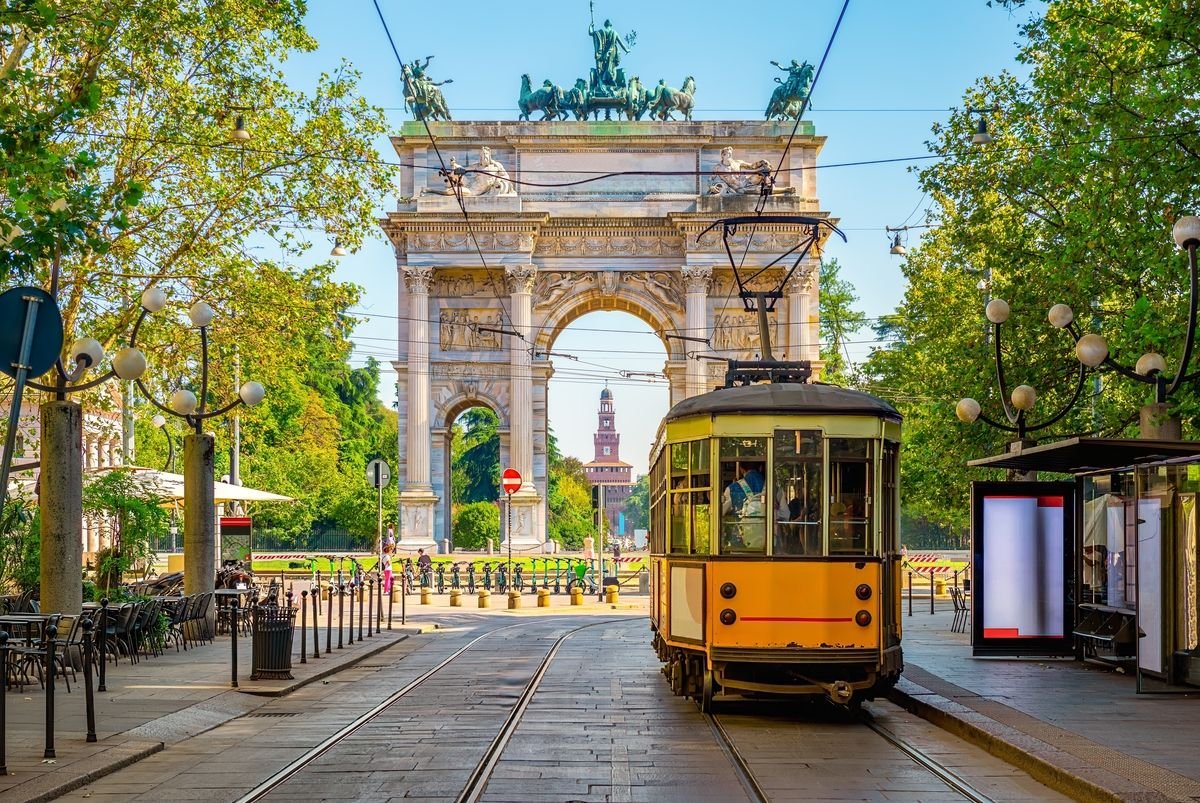
In the park, you will find picturesque alleys, a lake with a bridge, and the Triumphal Arch (Arco della Pace), erected in honour of Napoleon. It is also worth going to the top of Torre Branca, a steel tower designed by Gio Ponti in the 1930s, because its terrace offers a view of the entire city. Parco Sempione is an ideal place to relax after sightseeing.
Art and culture of Milan
Milan has been one of Italy's most important centres of art for centuries. It was here that Leonardo da Vinci worked, the world's most outstanding opera artists performed, and galleries and museums still attract millions of culture lovers today. Every step through Milan is an encounter with history, art, and music.
Leonardo3 Museum - Leonardo da Vinci Museum
In the very heart of the city, right next to the Galleria Vittorio Emanuele II, is the unique Leonardo3 Museum. This is an interactive museum dedicated to the genius of Leonardo da Vinci. Thanks to this place, you will understand what a versatile mind this artist, inventor, and scientist had.
In the museum, you can see faithfully reproduced models of his flying machines, robots, and musical instruments, as well as digital reconstructions of his works, including the "Last Supper". Leonardo3 is one of the few places in the world that has digitally reconstructed Leonardo's notebooks.
The exhibition is multimedia and interactive, which makes it ideal for both adults and children.
La Scala - Teatro alla Scala
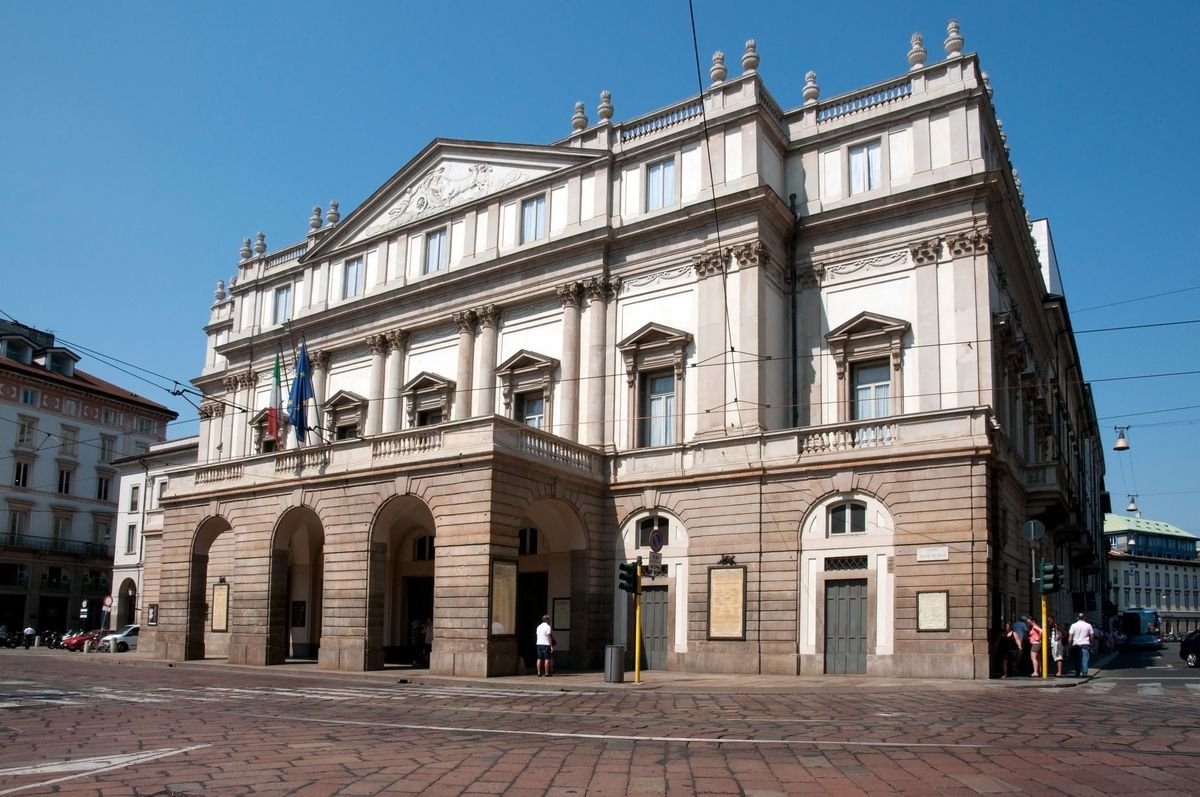
There is no other place in the world like La Scala (Teatro alla Scala). Opened in 1778, the opera house is recognised as a temple of music and one of the most important places in the history of opera. The works of Verdi, Puccini, or Rossini had their premieres here, and the most outstanding singers - Maria Callas, Luciano Pavarotti, and Plácido Domingo - performed on stage.
The building, designed by Giuseppe Piermarini, impresses with an elegant interior featuring red velvet boxes, crystal chandeliers, and gold. Everything makes the viewer feel as if they are in an era of royal splendour. It is worth visiting not only for a performance but also for the La Scala museum, where you can see costumes, instruments, and souvenirs of great artists. Tickets for premieres can sell out months in advance, but the museum can be visited almost every day.
Pinacoteca di Brera
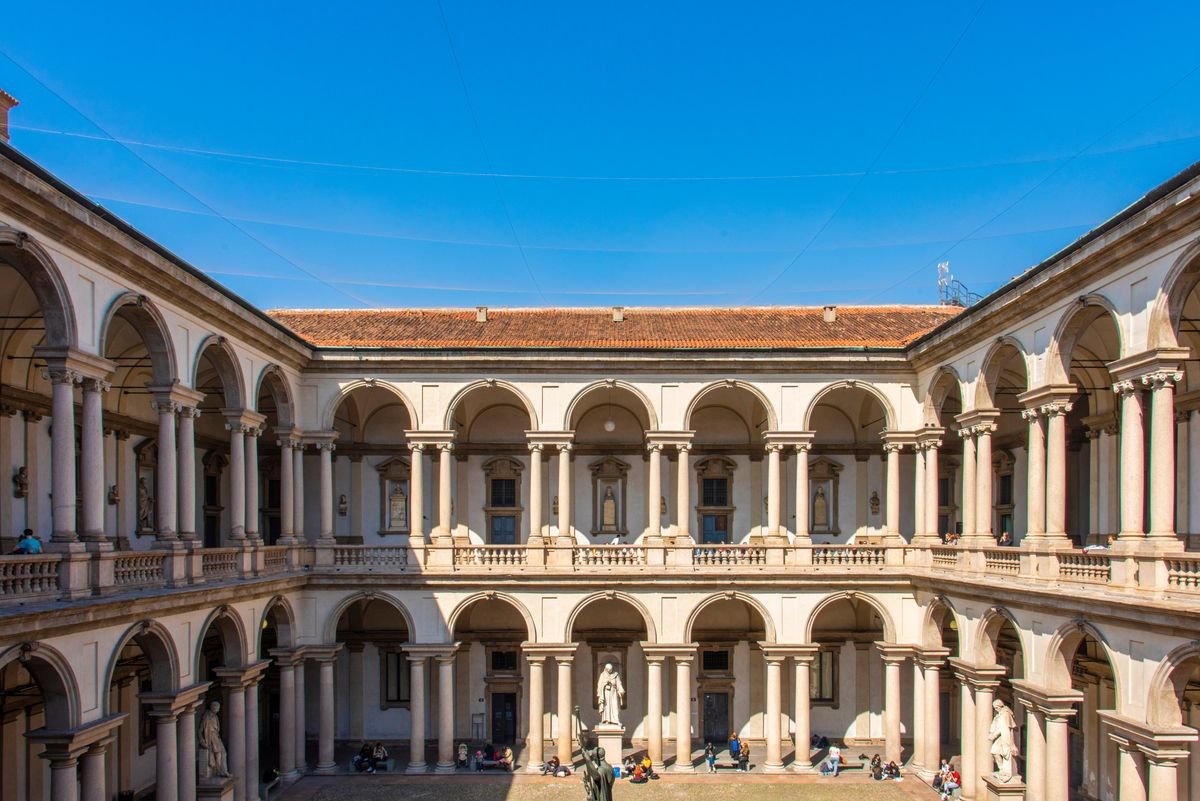
Pinacoteca di Brera is located in the Brera district. It is housed in a former Jesuit monastery, which was transformed into an academy of fine arts in the 18th century. Its collection includes masterpieces by Caravaggio, Raphael, Rubens, Bellini, and Canaletto. It is worth visiting the museum to see works such as Lamentation over the Dead Christ by Mantegna, Supper at Emmaus by Caravaggio, and The Kiss by Hayez.
Where can I see Leonardo da Vinci's The Last Supper?
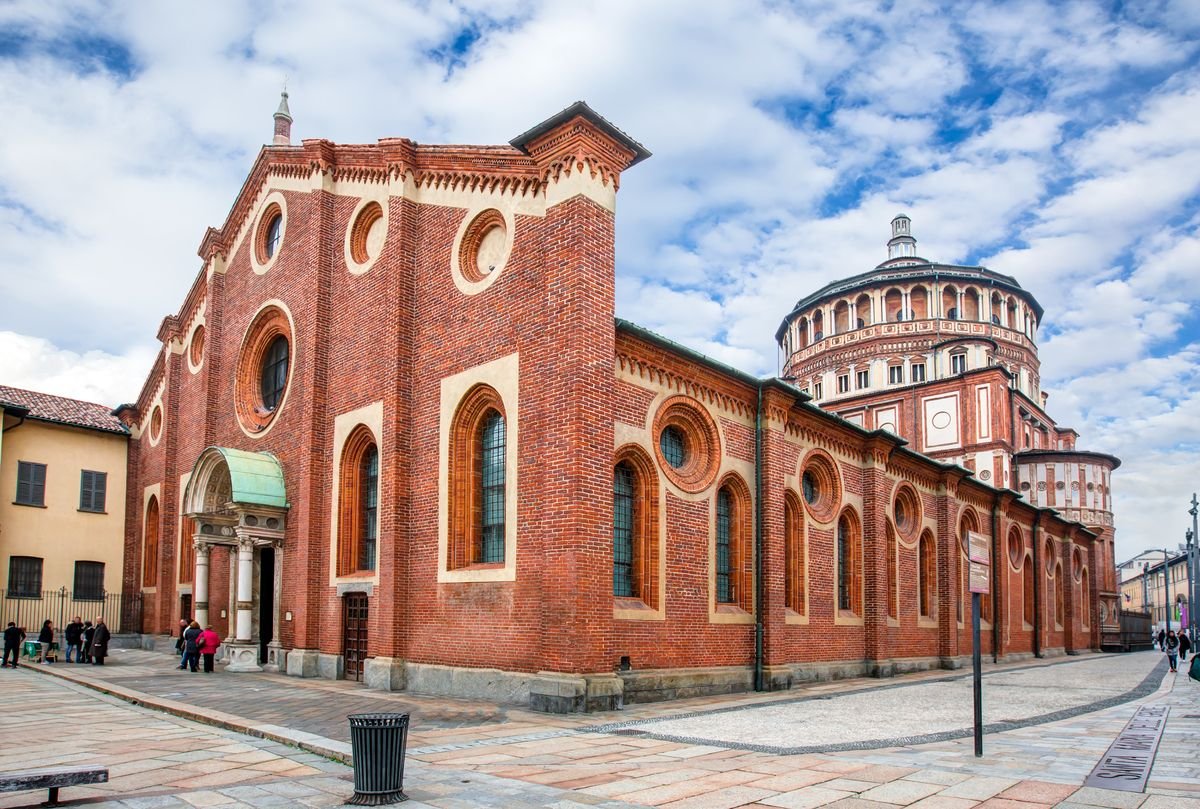
One of the world's most famous works, Leonardo da Vinci's Last Supper, is on the refectory wall of the Santa Maria delle Grazie basilica. Leonardo created it in the years 1495-1498 at the request of Duke Ludovico Sforza. He used an innovative technique of tempera on plaster, which unfortunately caused the painting to begin to deteriorate quickly. Thanks to years of restoration, we can admire its unusual details: the apostles' emotions, the interplay of light and space.
The painting has a hypnotic quality; it is one of those works worth seeing at least once in a lifetime. Entrance to the room is limited - small groups are allowed inside every 15 minutes, so tickets should be booked in advance.
A walk through the streets of Milan - an attraction on foot
When visiting Milan, it is worth stepping away from the hustle and bustle of Piazza del Duomo for a moment and taking a quiet walk around the area. It is here that you can feel the true atmosphere of the city: elegant townhouses from the turn of the 19th century, bustling cafes, and cobbled streets that witnessed the most important events in Milan's history.
Piazza Cordusio
Piazza del Duomo is an elegant square located just a few minutes' walk from the cathedral. In the 19th century, this place became the city's financial centre, with banks, the post office, insurance companies, and the stock exchange. To this day, it is surrounded by majestic buildings in the Neorenaissance and Art Nouveau styles. Among them, the impressive former Main Post Office (Palazzo delle Poste) and the headquarters of the Credito Italiano bank stand out.
Today, these historic interiors house elegant boutiques, restaurants, and cafes. This square is an ideal place for a morning coffee or a moment of rest between sightseeing. You can also start a tour from Piazza Cordusio, where the famous Via Dante begins, leading to the Sforza Castle.
Via Dante
A pedestrian street connecting Piazza Cordusio with the Sforza Castle. The elegant Via Dante is one of Milan's most representative streets. It was laid out at the end of the 19th century to connect the modern centre with the historical castle. Today it is full of shops, cafes, and restaurants.
Walking along Via Dante, it is worth paying attention to the architecture - richly decorated facades, cast-iron balconies, and Art Nouveau details are the quintessence of Milanese style. In summer, the street turns into a pedestrian zone full of street artists, musicians, and outdoor exhibitions. At the end of Via Dante, a monumental gate waits, leading directly to the courtyard of the Sforza Castle; it is the ideal end to a walk through the historical heart of Milan.
Piazza Affari
Just a few steps further is Piazza Affari, primarily known as the headquarters of Borsa Italiana, the Italian stock exchange. The square was designed in the 1930s and has symbolised Italy's financial heart ever since.
The most characteristic element is the "L.O.V.E." sculpture standing in front of the exchange building by the controversial artist Maurizio Cattelan, commonly known as "Milan's middle finger". A monumental hand with a raised finger pointed towards the exchange building is an artistic commentary on the world of finance and one of the city's most frequently photographed contemporary symbols.
Modern and less touristy Milan
Milan is a city that constantly combines the past with the future, next to Renaissance palaces and Gothic towers, skyscrapers, ecological buildings, and fashionable districts bustling with life.
Bosco Verticale
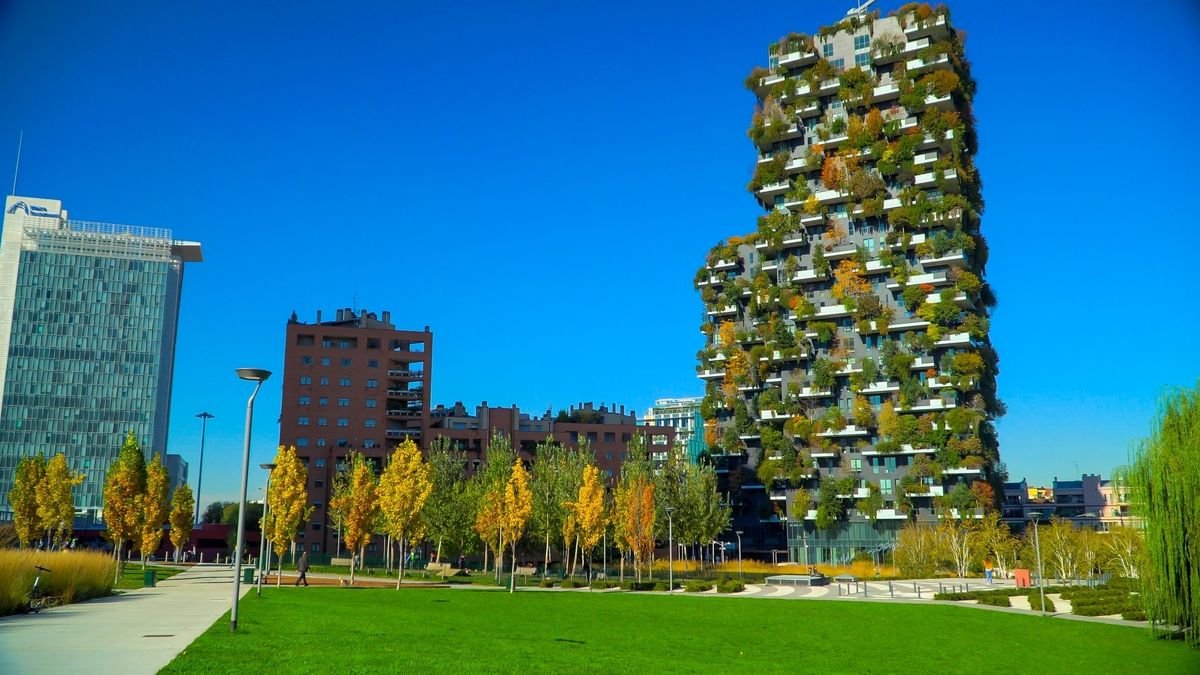
It is worth seeing in Milan, even though it is not a monument. One of the most interesting architectural landmarks of modern Milan, Bosco Verticale consists of two residential towers in the Porta Nuova district, each featuring trees and shrubs instead of traditional balconies. In total, over 20,000 plants grow here, purifying the air and creating a green oasis in the city centre.
The buildings were designed by Stefano Boeri, and the project won the title of the Most Beautiful Building in the world at the World Architecture Festival in 2015.
Navigli
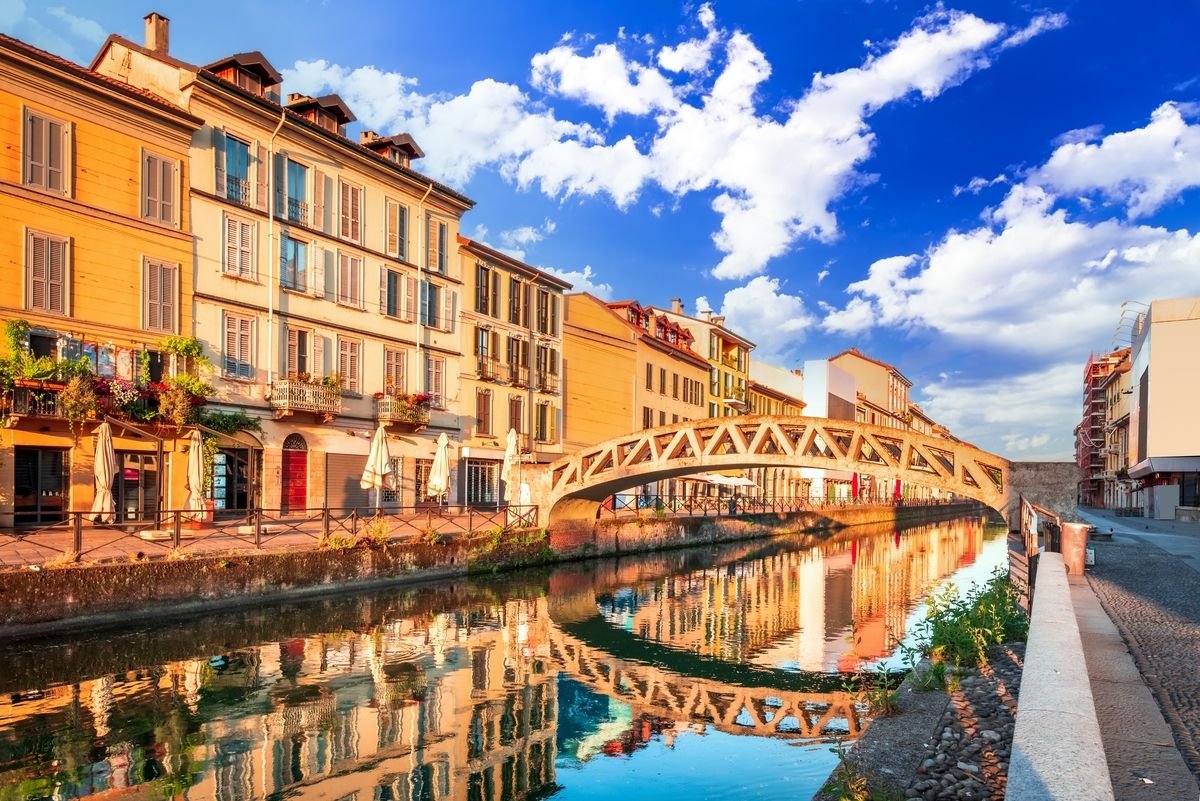
Although Navigli is considered the artistic district of modern Milan. Once, the canal system designed by Leonardo da Vinci served to transport the marble needed to build the cathedral, and today the canals are full of cafes, restaurants, and art galleries.
In the evening, Navigli becomes a centre of nightlife. Crowds walk along the water, and bars serve the famous Italian aperitivo. Every Saturday, a flea market takes place here, where you can find old vinyls, antiques, and handicrafts.
Darsena
At the end of the Navigli canals is Darsena, the former port of Milan, today revitalised and transformed into a modern public space.
For centuries, this place was a centre of water trade, and today it is a favourite meeting point for young Milanese. In summer, concerts and street food fairs take place here; in winter, markets, and an ice rink. Along the waterfront, you can walk, rent a pedal boat, or just sit with a coffee, admiring the sunset over the canals.
How to get to Milan? Best travel options
It is easiest to get to Milan by plane. You can land at one of three airports:
- Bergamo (Orio al Serio),
- Malpensa,
- Linate.
For people who do not like flying, coach connections (e.g., FlixBus) are also available.
From Bergamo Airport to Milan
Bergamo Orio al Serio Airport (officially Aeroporto di Milano-Bergamo) is the most popular airport for low-cost airlines. It is about 50 km from Milan's centre. The most convenient way to get from the airport to the city is by bus, which runs every 20–30 minutes, and tickets cost €10-16. Alternatively, you can reach Milan by train from Bergamo; the journey takes about 50 minutes.
Public transport in Milan. How to move around the city?
Milan has a well-organised public transport network, including the metro, trams, buses, and suburban rail, all operating within a single ticket (ATM Milano).
The metro consists of 5 lines (M1–M5) and connects every corner of the city. A single ticket costs €2.20 and is valid for 90 minutes from validation. Trams are a symbol of Milan - some are historic, wooden cars from the 1920s that still run through the city's streets. For convenience, it is worth downloading the ATM Milano application.
What to see in Milan? Is it worth visiting Milan?
Milan is a city where history meets modernity. The Gothic Milan Cathedral, the elegant Galleria Vittorio Emanuele II, and the modern Bosco Verticale show how harmoniously tradition and design are combined here. It is a place where you can see Leonardo da Vinci's Last Supper, go up to the cathedral's roof, and drink aperitivo overlooking the Navigli canals in one day.
Milan delights at any time of year, especially in spring and autumn, when the weather favours walks along Via Dante, relaxation in Parco Sempione or taking a guided tour of Milan. Just an hour's drive from the city is also Lake Como, ideal for a day trip from Milan. This region of Lombardy is full of art, fashion, and Italian lifestyle.
_389209b585.svg)


