Spinalonga - discover one of Crete’s most mysterious islands
Spinalonga is a small Greek island with a long history. From a distance, it looks beautiful: turquoise water, pale rocks, stone walls and views over Mirabello Bay. But once you step ashore, the real story begins. Read on and discover the remarkable history of Spinalonga Island.
_f3efa5230d.jpg)
Where is Spinalonga?
Spinalonga is a small island, covering 34 hectares, but its history is so complex that it is difficult to treat it as just another stop on a holiday map of Crete.
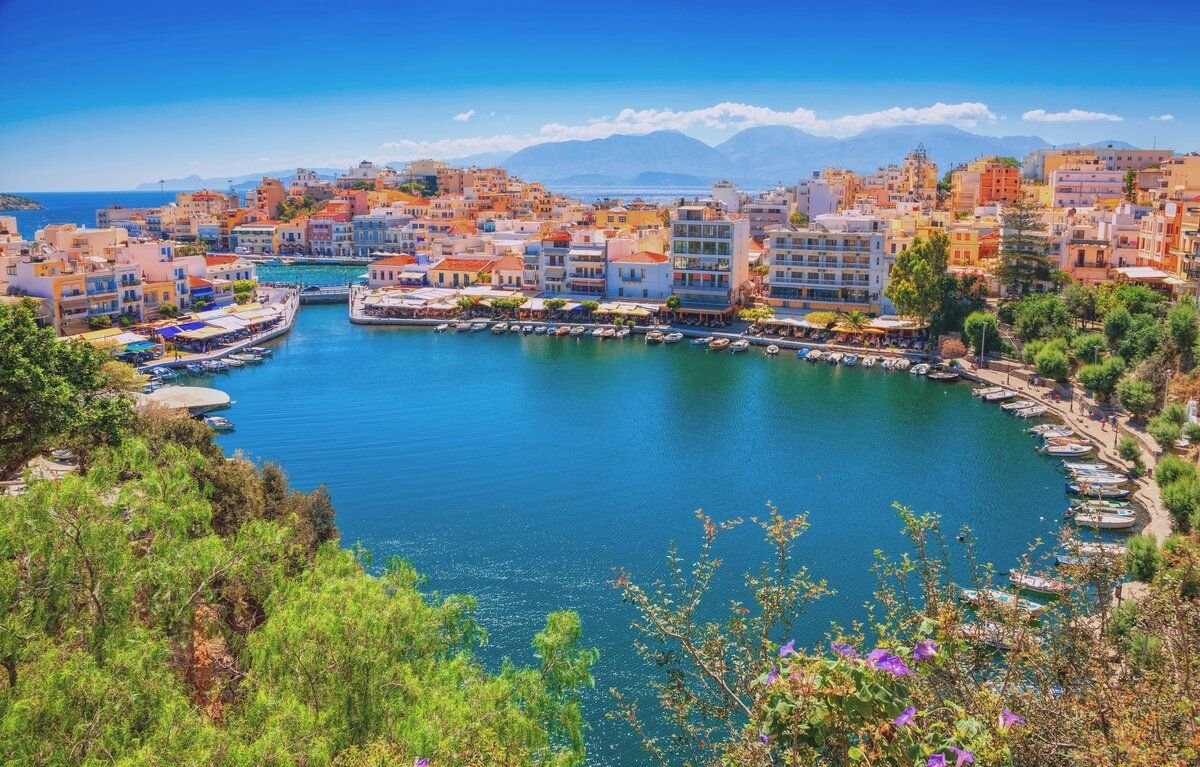
It is located off the north-eastern coast of Crete, in the Lasithi region, near the towns of Elounda, Plaka and Agios Nikolaos. It lies at the entrance to the natural harbour of Elounda, close to Mirabello Bay.
The island may be small, but for centuries its location was critical. On one side, it was close to the coast; on the other, it controlled access to the bay. That is exactly why the Venetians built a powerful fortress here, designed to protect this part of Crete from attacks coming from the sea.
From a distance, it looks beautiful: turquoise water, pale rocks, stone walls and views over Mirabello Bay. But this place attracts visitors for more than just its scenery. Spinalonga has something difficult to capture in photos. It is raw, peaceful, picturesque and moving all at once.
Today, Spinalonga is one of the most popular places to visit in this part of the island. Even the view from the boat makes an impression. First, you see stone walls rising straight out of the rocks, then narrow passages, ruins of old houses and an island that looks as if time stopped here many decades ago.
_a4b2d356de.jpg)
How to get to Spinalonga?
You can only reach Spinalonga by boat. The island lies close to the coast, so the crossing is not long, but the exact journey time depends on the port you depart from.
The most popular places offering boat trips to Spinalonga are Plaka, Elounda and Agios Nikolaos.
Boat trip from Plaka
Plaka is the closest village to Spinalonga, so the boat trip from here is the shortest. It is a practical option for travellers exploring Crete by car who want to reach the port independently. From Plaka, the island is almost within arm’s reach, so the crossing is quick and allows you to start sightseeing without much delay.
Boat trip from Elounda
Elounda is a popular holiday resort, from which you can also get to Spinalonga. The boat trip takes longer than from Plaka, but it is very scenic. Along the way, you can admire the bay, the coastline and the characteristic landscape of eastern Crete.
Boat trip from Agios Nikolaos
Agios Nikolaos is a larger town and one of the most convenient starting points for a trip to Spinalonga. Boat trips from this port are often part of full-day excursions that combine visiting the island with additional attractions, such as a walk around Agios Nikolaos, a swimming stop or a visit to a local olive oil factory.
_77a9aaa8d7.jpg)
Spinalonga - history
Even in ancient times, the area around Spinalonga had strategic importance. The island was located near the ancient city of Olous, whose remains are associated with the area of modern-day Elounda. Its position by a natural harbour made this part of Crete important for both trade and defence.
The most recognisable chapter in the island’s history began during Venetian rule. At the end of the 16th century, construction of a powerful fortress began here. Its purpose was to protect the harbour and the surrounding coastline from pirate attacks and Ottoman forces. To this day, the Venetian fortifications give Spinalonga its distinctive appearance.
After years of conflict, the island came under Ottoman rule. Over time, a settlement developed here, with houses, shops, and workshops. Spinalonga was therefore not only a military point on the map; for a while, everyday life thrived here.
Why is Spinalonga called the island of lepers?
In the 20th century, Spinalonga became the setting for a difficult chapter in history. The island was used as a place of isolation for people suffering from leprosy, also known as Hansen’s disease. Patients were sent here from Crete and other parts of Greece. For many of them, arriving on the island meant the end of their former life: separation from family, loss of home and loss of their place in society.
This is the period that most strongly captures the imagination of today’s visitors. Not because it is sensational, but because it is deeply human. On Spinalonga, you can see not only ruined buildings but also traces of the everyday lives of people who, despite the isolation, tried to create a sense of normality here. At that time, the island had houses, small shops, meeting places, churches, a hospital and basic infrastructure. Residents worked, prayed, studied and organised their lives in a place that, for many, must have felt like the end of the world.
Today, Spinalonga is no longer a place of separation, but a place of memory. It reminds us of fear of illness and social exclusion, but also of the strength of people who were able to build a community even in difficult conditions.
_28f0af1281.jpg)
What to see on Spinalonga Island?
Spinalonga is not large, but during a walk around the island you can see many places that clearly show its complicated history. It is best to explore it without rushing. This is not a place to hurry through just to take a few photos.
The Venetian fortress
This is a stop you simply cannot miss because the first thing you notice on the island is its defensive walls. The Venetian fortress, dating back to the late 16th century, is the most characteristic feature of Spinalonga. The stone fortifications surround the island and still make a huge impression today, especially when you approach by boat.
It is worth climbing to the upper parts of the walls and bastions, where you can enjoy panoramic views of Mirabello Bay, Plaka and the coast of Elounda.
The main gate
Most visitors begin their tour at the main entrance, which leads through the so-called Dante’s Gate. This was the route by which residents of the leper colony arrived on the island. For many people, passing through the tunnel meant a symbolic farewell to their former life.
Today, it is one of the most moving places on Spinalonga. The stone corridor is relatively short, but its history draws many visitors to linger.
_0200b420e4.jpg)
The shopping street and the old settlement
After passing through the gate, you reach the main street of the former settlement. Shops, workshops, a bakery, and small service points once operated here. During the period of the leper colony, residents tried to lead as normal a life as possible.
Walking through the stone streets, you can see the remains of houses, steps, courtyards, and fragments of old buildings. This is where you can best feel that Spinalonga was once a real, living little town.
Church of Saint Panteleimon
The most important church on the island is the Church of Saint Panteleimon, the patron saint of the sick and healers. For the colony's residents, it was a place of prayer, meetings, and religious ceremonies.
There are also smaller chapels and the remains of other religious buildings on Spinalonga, reminding visitors of the importance of faith in the lives of people living in isolation.
Cemetery and memorial sites
A less well-known but very moving place is the small cemetery and the memorial sites dedicated to the island's former residents. It is here that Spinalonga’s history becomes most personal, reminding us that behind the ruins were the lives of real people.
Viewpoints
Spinalonga also offers beautiful landscapes. From different parts of the island, you can see Mirabello Bay, the coast of Crete, Plaka and the area around Elounda. The contrast between the island’s difficult history and its calm, bright scenery is one of the reasons why this place stays in your memory for so long.
_32d7a93375.jpg)
How long does it take to visit Spinalonga?
A visit to Spinalonga itself usually takes around 1.5 to 2 hours. That is enough time to follow the main route, see the most important sites and stop for the views.
If you are interested in history, it is worth giving yourself a little more time. Spinalonga is not a place that is best explored rushing. The most interesting details are the fragments of buildings, gates, traces of old streets, views from the walls and moments of silence between groups of visitors.
The whole trip takes longer, of course, once you include the boat ride and the journey to the port. A short trip from Plaka may take a few hours. An excursion from Agios Nikolaos or from resorts located farther away, such as the area around Heraklion, usually takes most of the day.
When is the best time to visit Spinalonga?
The best time to visit Spinalonga is spring, early summer and autumn. Temperatures are more pleasant then, and sightseeing is less tiring than in the middle of the high season.
You can also visit the island in July and August, but be prepared for the heat. Spinalonga is rocky, dry and offers little shade, so the sun can be intense in the middle of the day. If you are planning a summer visit, it is best to choose a morning boat trip or an excursion with a well-balanced programme that gives you a moment to rest after sightseeing.
The ground on the island can be uneven, so flip-flops are not the best choice. Before setting off, it is also worth checking the current opening hours and boat schedules. Boat trips depend on the season and weather conditions, and in strong winds the programme may change.
Is Spinalonga worth visiting? Summary
Yes, Spinalonga is one of those places in Crete that is truly worth visiting. Not because it is the biggest, loudest or most entertaining attraction. Quite the opposite. Its strength lies in its atmosphere, history, and the contrast between the beauty of the landscape and its difficult past.
It is an island that offers a different perspective on Crete, not only as a holiday destination but also as a place full of history, cultural influences, and human stories.
If you are interested in fascinating places in Crete, Spinalonga should be high on your list. It is not just another attraction to quickly tick off, but a place that stays in your mind long after the trip is over.
- 26.05.2026
_389209b585.svg)


