What to eat at trip to Greece? Traditional greek food
Greek food is simple and delights with every bite. In this article, you will discover its most important flavours. There is also information about the ingredients that shape Greece’s culinary identity. Thanks to this, you will quickly learn what is truly worth trying during your trip.
What is the best Greek food like?
Greek cuisine is the essence of the Mediterranean lifestyle - simple, healthy, and full of natural flavours. It is based on fresh vegetables, aromatic herbs, Greek olive oil, and products with a tradition dating back thousands of years. It is a cuisine that values seasonality, locality, and the quality of ingredients.
The dishes are light yet filling, aromatic but not complicated. Greeks believe that a good meal is not just about food, but also about the joy of spending time together.
Importantly, due to its long and eventful history, it draws from many influences: from Ottoman cuisine, through Balkan, to Italian, creating a unique combination of flavours characteristic only of Greece.
Practical tips for travellers - how to eat in Greece?
When travelling around Greece, it is worth knowing that food is more than just a meal - it is an important part of the culture and everyday life. In Greek tavernas, it is very common to order several dishes for the table and share them, so everyone can try a bit of everything. This is the local way to eat and a great way to experience more flavours.
What else is worth knowing before visiting a Greek restaurant?
- Food prices in Greece are relatively affordable. In a taverna, you will usually pay around 10-20 euros per person for a full meal, while quick dishes such as souvlaki in pita cost around 3-5 euros.
- Tips are not mandatory, but if you are satisfied with the service, it is standard to leave about 5-10% of the bill.
- Keep in mind that service operates at its pace - in Greece, no one rushes.
- Greeks eat slightly later and observe a “siesta” between 2/3 PM and 5 PM. Lunch is typically served between 1:00 PM and 3:00 PM, while dinner starts in the evening, often after 8:00 PM. In many places, especially outside the high season, kitchens may close earlier or operate on a limited schedule.
- When ordering, pay attention to the names of dishes - a traditional Greek salad is called “horiatiki” and does not include lettuce, which is frequently found only in tourist versions.
- Water is not always free, and olive oil is a staple of most dishes - its absence may seem unusual.
- If you want to take it a step further, a great idea is to join local guided tours, culinary excursions, or tastings - regularly led by locals who show places known mainly to residents.
So, let’s set off on a culinary journey through Greece!
Greek food - traditional Greek starters and main courses
Greek cuisine is a combination of fresh ingredients, simple techniques, and flavours ripened in the sun. At its core, Greek olive oil, aromatic herbs, seasonal vegetables, and recipes date back to ancient times.
If you are planning a trip to Greece or simply want to get to know its flavours better, below is an overview of savoury dishes worth trying.

Souvlaki - a classic of Greek street food
Souvlaki is one of the most recognisable flavours of Greece. Pieces of meat, most often pork or poultry, marinated in herbs and olive oil, are grilled on skewers, creating a simple yet exceptionally aromatic dish. It is typically served with fresh vegetables, Greek yoghurt, and pita bread - resembling a kebab.
Interestingly, a similar dish was already known in Ancient Greece. Archaeologists have found clay stands for roasting meat on skewers dating back to around 2000 BC.
Moussaka - a baked dish that became a symbol of Greece
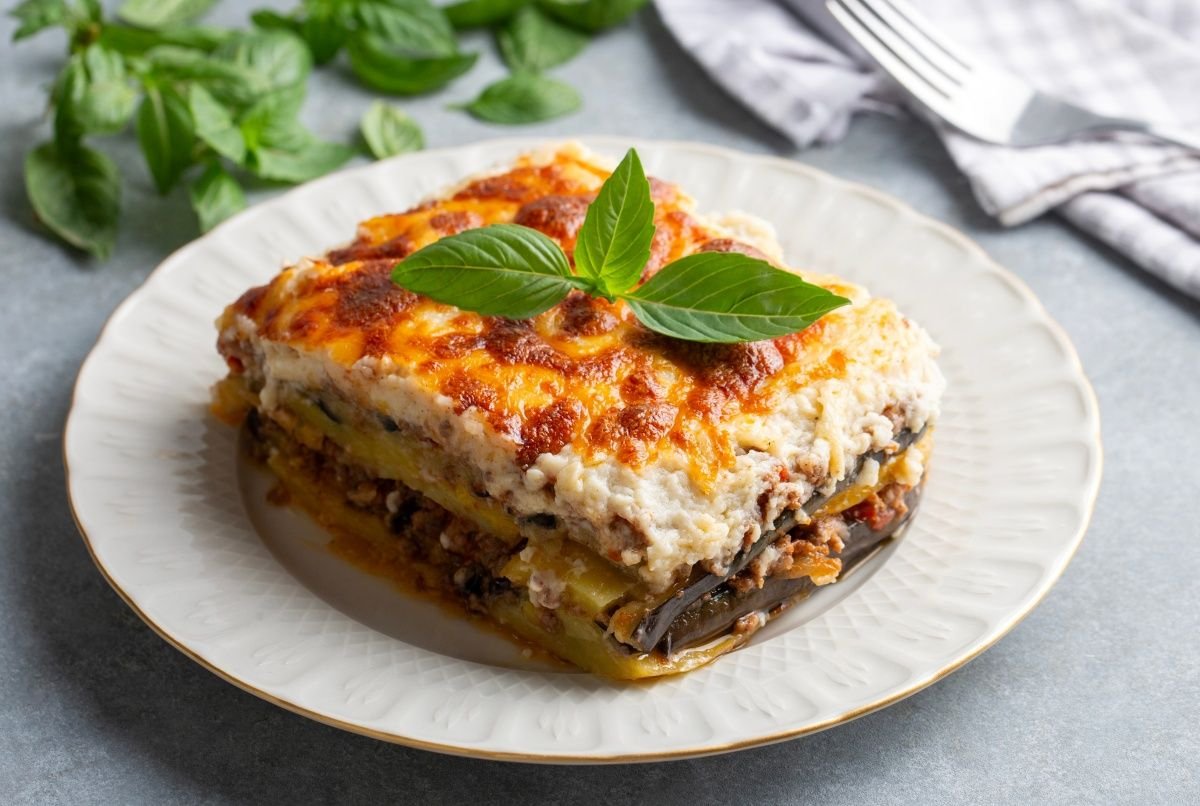
Moussaka is a layered casserole with aubergine, minced meat, tomatoes, and delicate béchamel sauce. This filling, home-style dish tastes best served hot, straight from the oven.
The version known today was popularised around 1920 by chef Nikolaos Tselementes, who was inspired by French culinary techniques.
Dolmades - grape leaves with aromatic filling
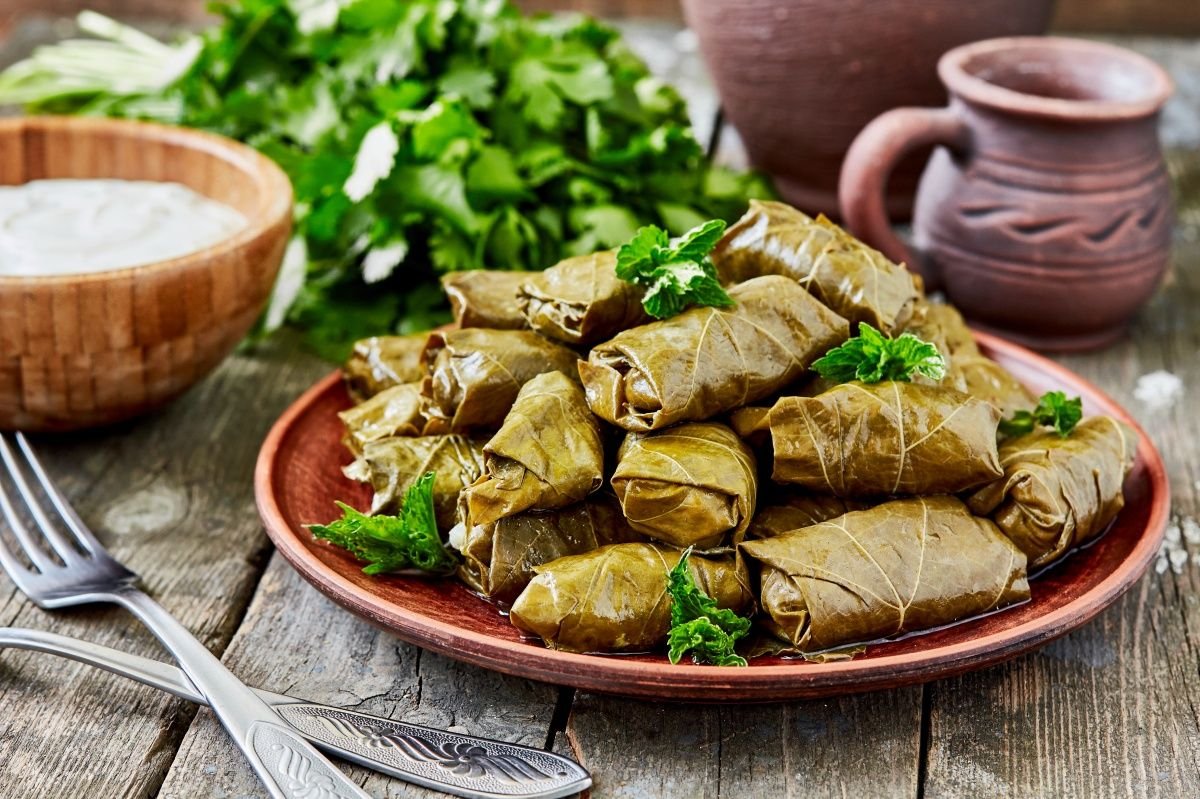
Dolmades are small rolls made from grape leaves, filled with rice, herbs, and sometimes meat. Their flavour is enhanced by lemon juice, which gives them a refreshing note.
In Greece, they are served both as a starter and a light dish. The tradition of preparing them dates back a long time - similar dishes were already part of the Ottoman Empire's cuisine. The word “dolma” itself is of Turkish origin and means “something stuffed” or “filled.”
Taramosalata - a creamy roe spread
Taramosalata is one of the most characteristic Greek spreads. It is made from tarama, which is salted roe (most often cod or carp), combined with Greek olive oil, lemon, and bread or potatoes. It has an intense, slightly salty taste, and its colour ranges from creamy to pink, depending on the type of roe used.
It is a popular starter, especially on the first day of Lent.
Spanakopita - spinach in crispy filo pastry
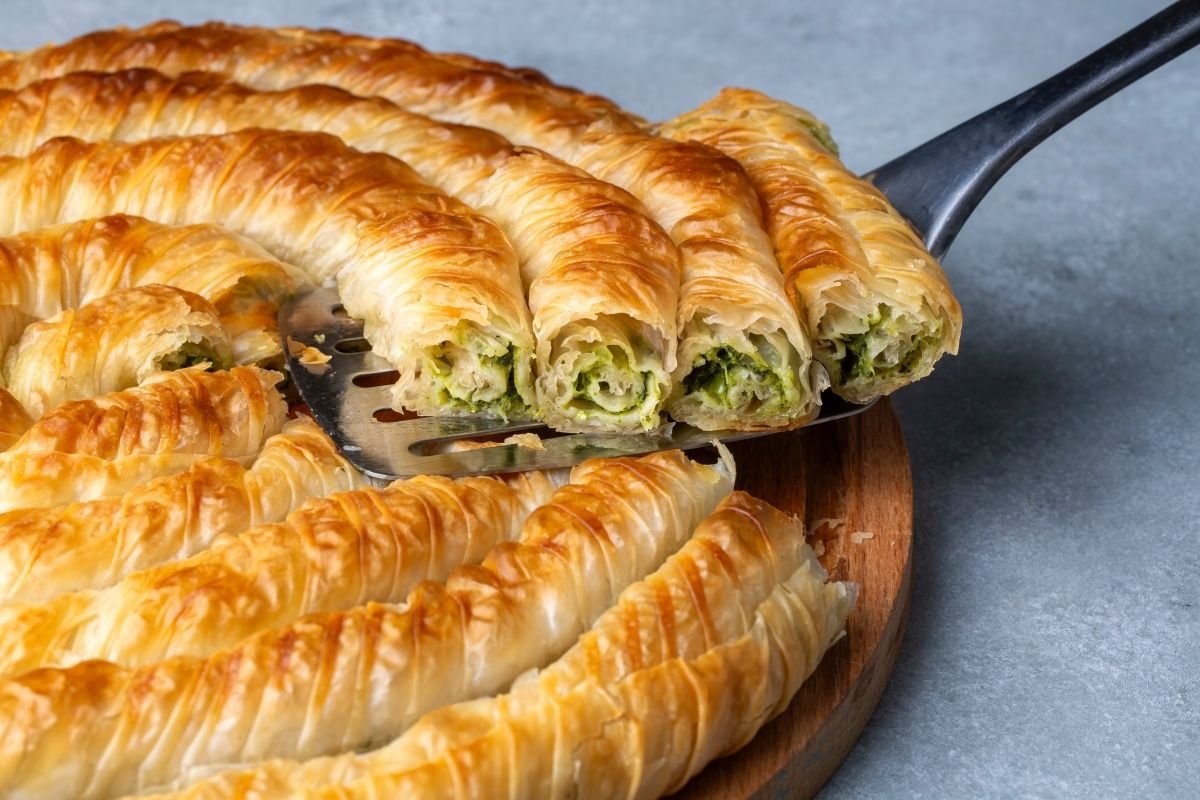
Spanakopita is one of the most popular vegetarian dishes in Greece. Thin, delicate filo pastry is filled with spinach, onion, herbs, and feta cheese.
In many Greek homes, the recipe for the perfect spanakopita is passed down from generation to generation, and variations depend on the region - some are more herbal, others more cheesy.
Spanakopita is also known as “borek” or “burek” (Balkan/Turkish names). It can be found in grocery discount stores in the bakery section.
Fasolatha - the national soup of the Greeks
Fasolatha is a hearty white bean soup, often considered the national dish of Greece.
Cooked with vegetables, Greek olive oil, and aromatic herbs, it is both simple and full of flavour.
Its roots date back to ancient times - a similar dish was eaten by gladiators in ancient Rome.
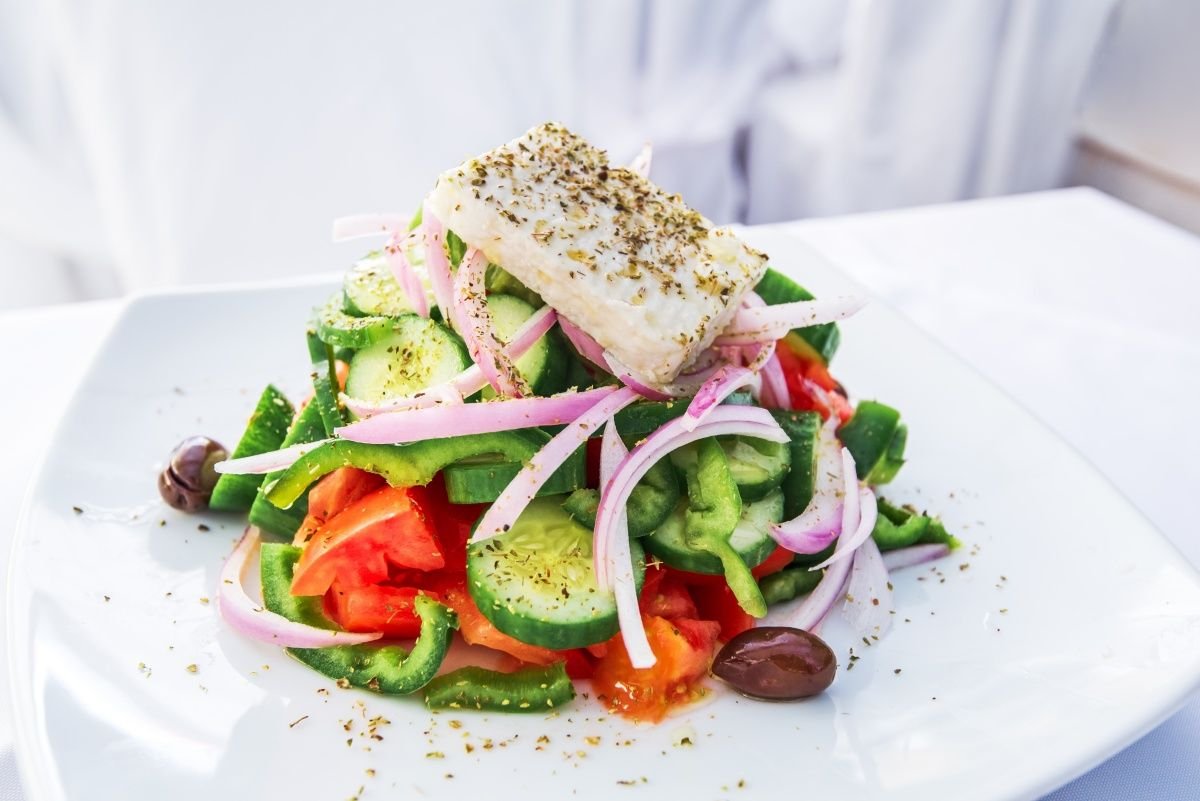
Greek salad
Greek salad, known locally as horiatiki, is a classic combination of tomatoes, cucumbers, red onion, feta cheese, and Greek olives, drizzled with Greek olive oil.
In traditional Greek food, you will not find lettuce - this is more typical of tourist variations.
Its secret lies in the quality of the ingredients, and above all, in good olive oil.
Sweet food in Greece - Greek desserts
Greek desserts combine rich flavours, aromatic spices, and a long tradition of sweetening with honey, a staple ingredient in Greek baking for centuries. Many of these sweets have their roots in Ottoman cuisine, which is why they are often based on thin filo pastry, nuts, pistachios, and syrups.
Koulouri - a breakfast snack and Greek coffee
Koulouri is a round, crispy bagel covered with sesame seeds, most commonly sold at street stalls in Athens and Thessaloniki. The dough is made with butter and vanilla.
Greeks eat it “on the go” on their way to work or as a light breakfast with Greek yoghurt. It is frequently prepared around Easter, especially on Holy Saturday.
The history of koulouri dates back to Minoan civilisation - similar bagels were made over 3,000 years ago.
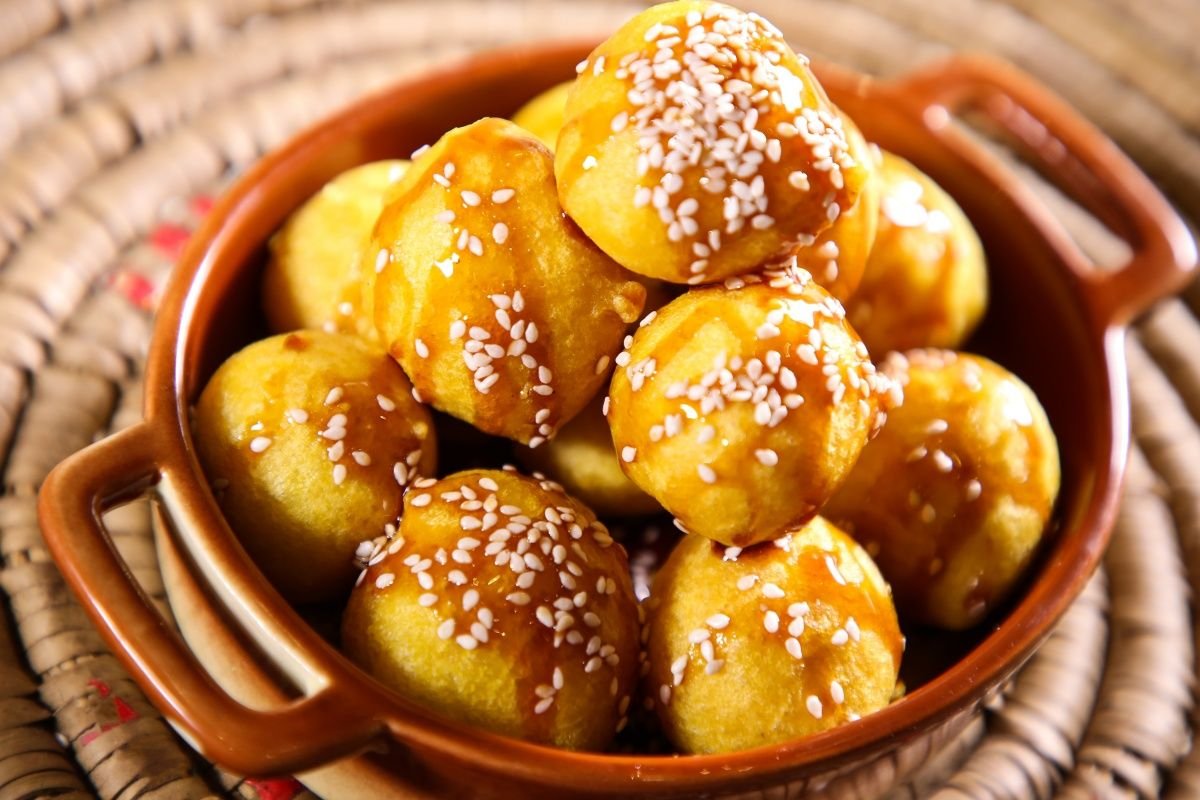
Loukoumades, lokma - Greek doughnuts
Loukoumades are small, golden balls fried in deep oil, which are then drizzled with honey and sprinkled with cinnamon or nuts.
Their tradition is old - similar sweets were served in Ancient Greece and during the Byzantine period as rewards for ancient Olympians.
Today, you can find lokma in taverns, at fairs, and in cafés, where they are served with ice cream and toppings.
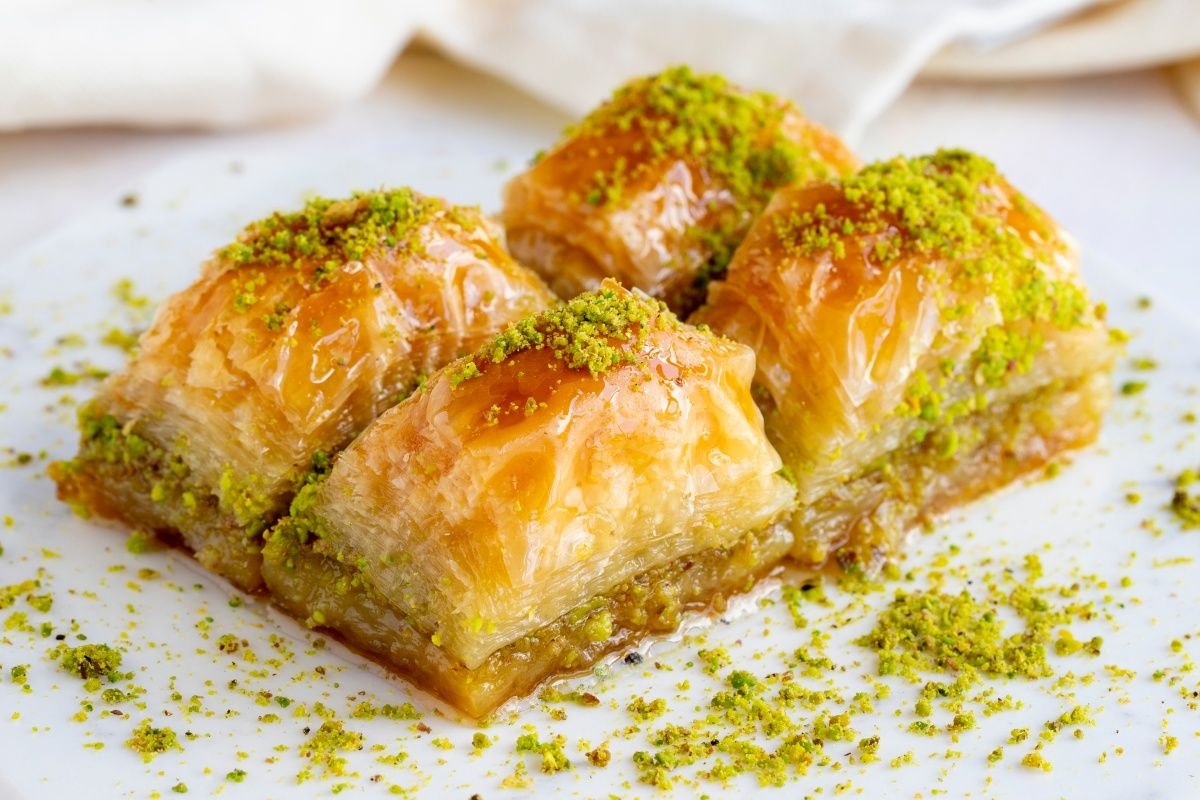
Baklava - a sweet classic with nuts
Baklava is one of the most iconic pastries in the entire Mediterranean region. In Greece, it is most often prepared from layers of filo pastry, filled with a mixture of nuts and an aromatic syrup made from honey, lemon, and cinnamon.
It is sweet, intense, and very aromatic - perfect with a cup of strong coffee or tea.
Its origin is still debated: Turkey and Middle Eastern countries also claim baklava as their own.
What is traditional Greek food based on? Greek cuisine ingredients
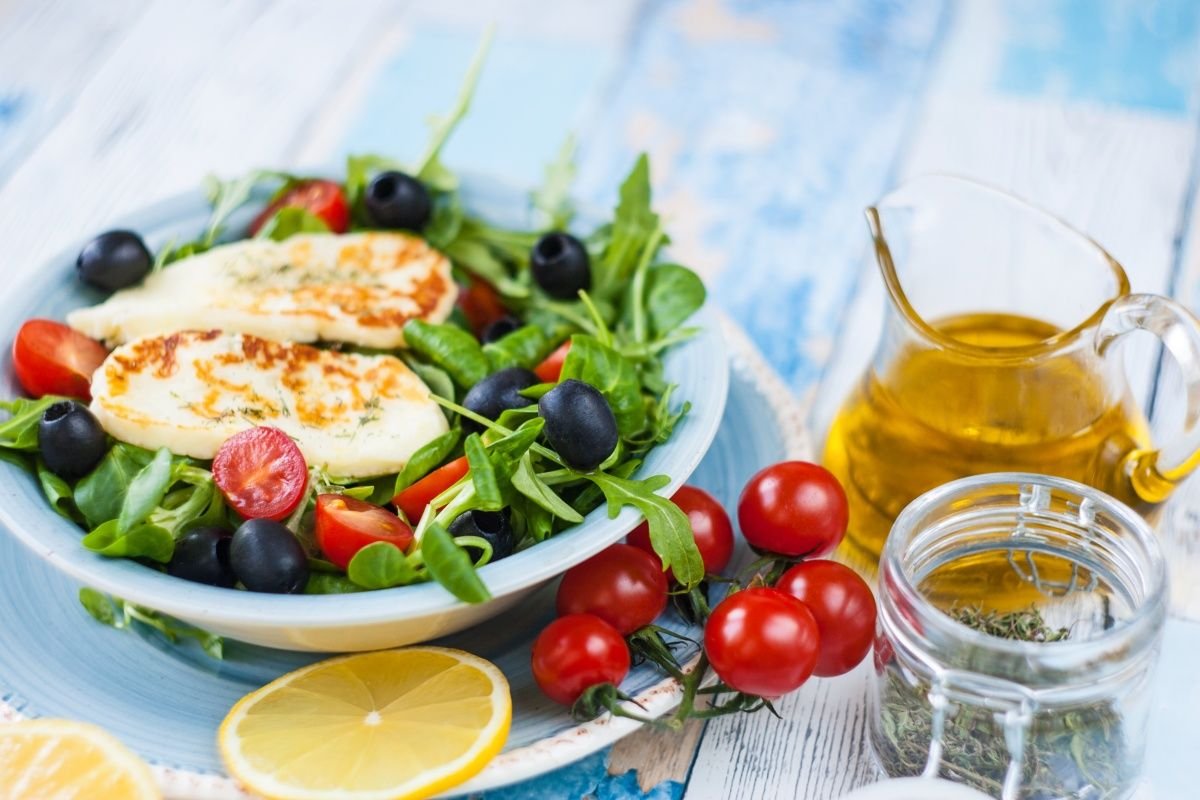
Halloumi
Halloumi, although associated with Cyprus, is also very popular in Greece. Thanks to its structure, it does not melt when grilled, which makes it an ideal grilled starter.
Served with olive oil, fresh vegetables, or herbs, it works well as both a side dish and a standalone meal.
Greek olives
Greece is famous for high-quality olives, especially the Kalamata variety, known for its dark colour and intense flavour. Greek olives are an essential part of the local diet and have been present on tables for thousands of years. They are a true hallmark of the country.
You can eat them as a snack, a side dish, or an ingredient in salads.
Pita bread
Pita is a soft wheat flatbread that pairs perfectly with grilled meats, vegetables, and dips such as tzatziki or taramosalata.
Its characteristic “pocket” makes it ideal for stuffing with aromatic ingredients like vegetables, dips, and souvlaki.
Tzatziki
Tzatziki is a creamy dip made from Greek yoghurt, grated cucumber, garlic, and Greek olive oil. Refreshing, light, and highly aromatic - perfect with grilled dishes, fresh vegetables, and pita bread.
Honey
Honey is one of the oldest and most valued products of Greek cuisine. Already in ancient times, it was considered the “food of the gods,” and Homer mentioned it in his epics.
To this day, Greece is well-known for its excellent thyme honey, produced on islands full of herbs and wild vegetation.
Greek honey is thick, aromatic, and intense in flavour - it is added to desserts such as loukoumades or baklava, as well as to Greek yoghurt and herbal infusions. It is one of the foundations of local gastronomy.
Wine
Wine in Greece has a tradition of over 4,000 years. The ancient Greeks drank wine and developed its culture - Dionysus, the god of wine, was one of the most important deities in mythology.
Today, Greece continues to impress with the diversity of its wines, especially varieties such as:
- Assyrtiko from Santorini - a dry white wine aged in oak, and a sweet white wine made from sun-dried grapes.
- Agiorgitiko from the Peloponnese - a red wine whose flavour depends on the cultivation method, characterised by a spicy flavour and notes of plum.
Wine is a natural complement to Greek dishes and also an ingredient in many recipes, as its dry notes pair perfectly with vegetables, olive oil, and aromatic cheeses.

_389209b585.svg)


